
Many pond owners do the right things year after year and still feel like they’re fighting the same problems. Meanwhile, a nearby pond with similar weather and location seems to stay clearer with far less effort. That difference isn’t luck — and it isn’t neglect.
Some ponds are structurally and biologically set up to succeed, while others quietly accumulate issues over time. Understanding those built‑in differences is the first step toward realistic expectations and long‑term improvement.
Quick Summary — Why Some Ponds Always Struggle • Pond depth, shape, and shoreline design affect long‑term health. • Nutrients and organic matter accumulate differently in every pond. • One‑size‑fits‑all treatments rarely solve recurring problems. • Long‑term success requires matching care strategies to pond structure.
Two ponds can sit just miles apart and behave completely differently because of how they were built. Shallow ponds warm faster, collect more sediment, and support heavier plant growth. Ponds with irregular bottoms or wide shallow edges tend to trap organic debris, even if the surface looks fine.
Depth variation matters just as much as overall depth. Ponds with limited deep water struggle to buffer temperature swings and oxygen changes, which accelerates algae growth and organic buildup over time.
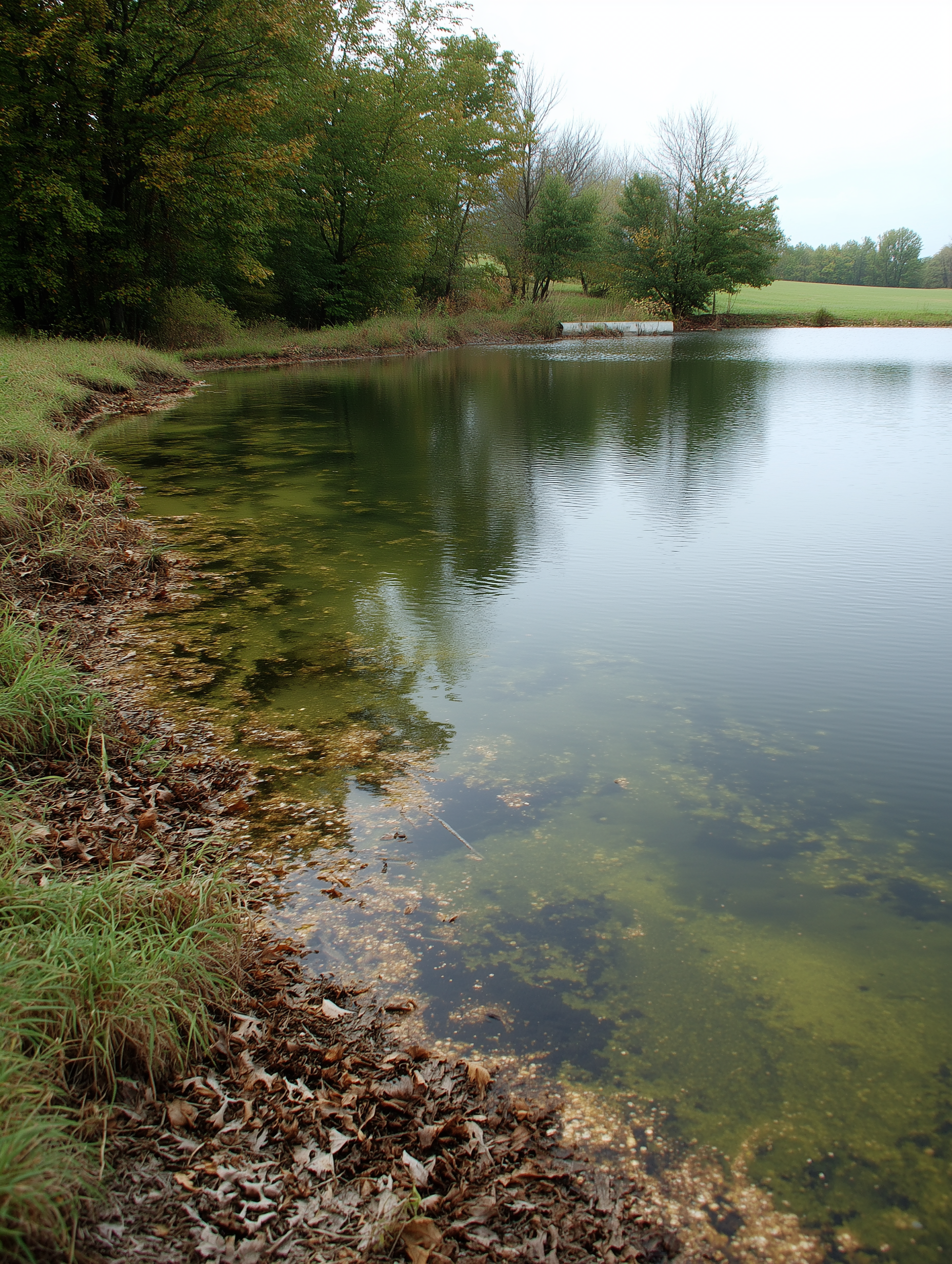
The edges of a pond quietly control much of what happens in the water. Runoff enters at the shoreline, organic debris settles there first, and aquatic plants establish themselves in shallow edge zones before spreading outward.
Ponds with steep, well‑managed shorelines typically experience fewer recurring issues than ponds with wide, shallow margins that act as nutrient collection zones. Ignoring the shoreline often means treating symptoms instead of causes.
Clear water can be misleading. Nutrients continue to build in pond sediment long before problems become visible. Leaves, grass clippings, runoff, and decaying vegetation slowly enrich the pond bottom year after year.
Without intervention, this nutrient reserve fuels algae blooms, weed growth, odors, and oxygen stress — even if treatments temporarily improve appearance.
Spot treatments can provide short‑term relief, but they rarely address the underlying drivers of recurring problems. When nutrients and organic matter remain in place, the same issues tend to return each season.
Long‑term pond management focuses on reducing what feeds the problem, not just what floats on the surface.
Healthier ponds usually share a few key traits:
Balanced depth and bottom contours
Managed shorelines that limit runoff
Ongoing nutrient and organic matter reduction
These ponds don’t eliminate maintenance — they simply respond better to it.
Learn how targeted nutrient reduction treatments and professional pond muck management help correct recurring problems at their source.
Some ponds require more attention because of their design and environment. That doesn’t mean they can’t improve — it means they need strategies tailored to how they actually function.
Professional evaluations focus on pond structure, sediment, shoreline behavior, and biological load to determine what will genuinely improve conditions instead of repeating the same cycle each year.
If your pond struggles year after year despite regular care, it may be time to look beyond surface treatments.
📞 Call Highland Pond Management (830) 914‑2306
We help pond owners identify why problems persist and build long‑term solutions that actually work.
