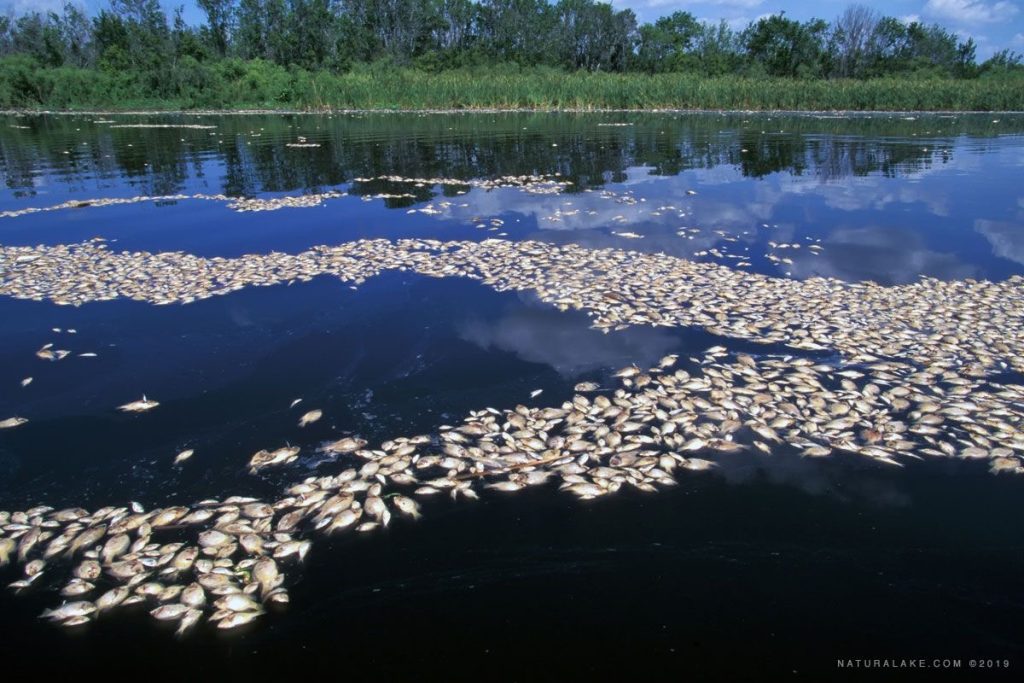
Many Texas pond owners are caught off guard by late summer fish deaths. One overlooked cause? Pond stratification — a natural process that can trigger sudden oxygen crashes. If your pond looks fine on the surface, but fish are gasping near the top or dying overnight, stratification might be to blame.
Stratification silently builds in Texas ponds during hot, still weather — but when that layered water suddenly mixes, it can spell disaster for fish. This blog explains what it is, why it happens, and how to prevent it. Highland Pond Management helps landowners keep ponds healthy year-round with seasonal strategies like aeration, bacteria treatments, and fall planning. ⸻
Your pond may seem calm on the surface in August, but under the water, things are heating up — literally. With longer days, warmer nights, and stagnant conditions, many ponds in Texas Hill Country begin to stratify, creating invisible but dangerous layers of water. Understanding this process is key to preventing costly fish kills and oxygen crashes.
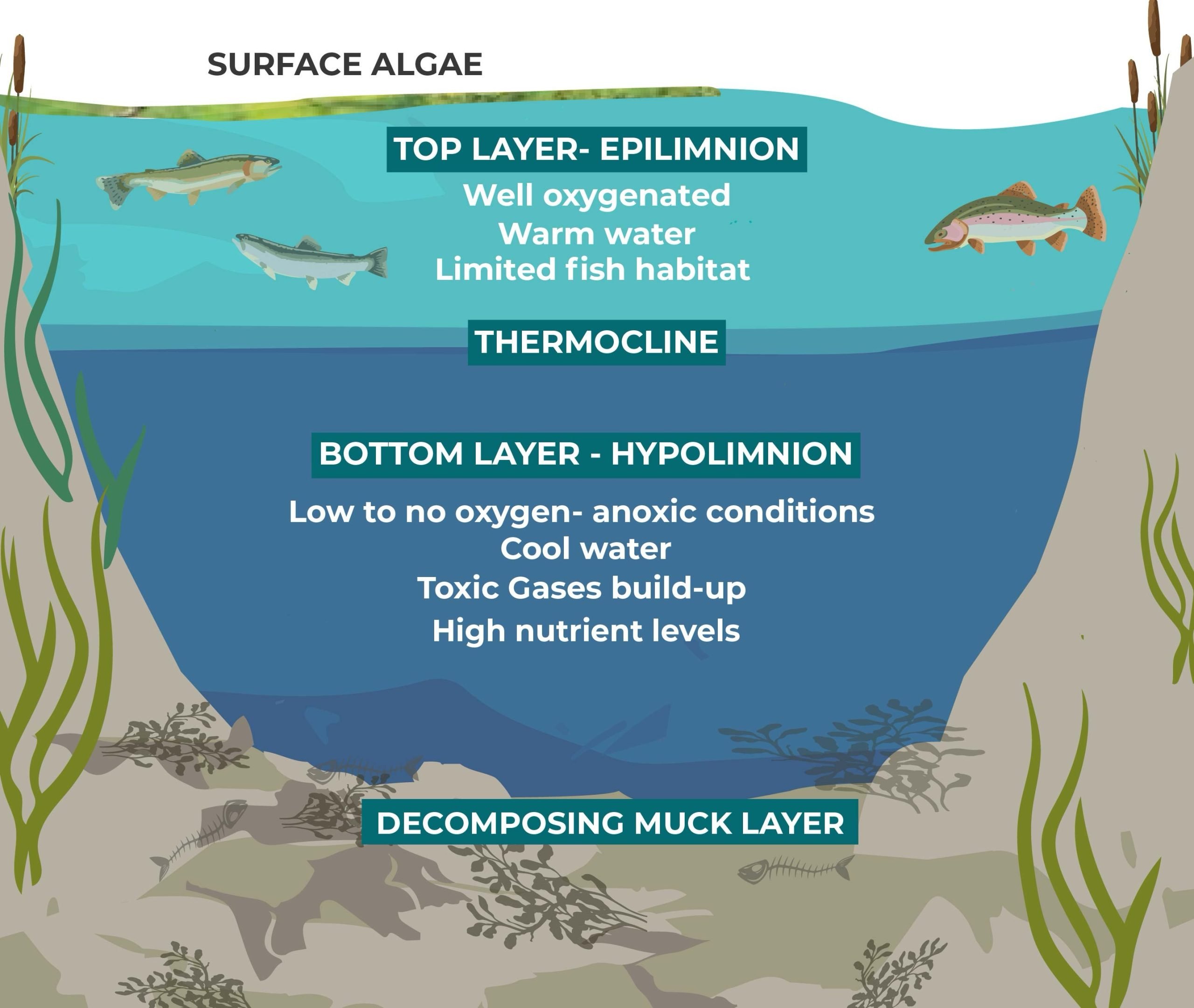

Pond stratification happens when hot weather causes the water column to split into layers:
A warm, oxygen-rich top layer (epilimnion)
A cold, oxygen-starved bottom layer (hypolimnion)
These layers stop mixing, trapping nutrients and gasses — and eventually creating poor water quality near the bottom.
Stratified ponds might seem normal until a storm, temperature drop, or windy front causes a turnover — mixing the layers. This sudden shift can cause:
Oxygen crashes
Toxic gas release from muck
Sudden fish kills (especially large fish)
It’s one of the most common causes of late-summer pond emergencies in Central Texas.
Not sure if your pond is stratifying? Look for:
Fish hovering or gasping near the surface
No visible water movement or circulation
Foul odor near shoreline
Sudden algae die-off or murky bottom
The good news? Stratification can be prevented or managed with a few proactive steps:
Aeration: Bottom-diffused systems gently circulate layers
Muck Reduction: Adding beneficial bacteria reduces gas buildup
Dye Use: Pond dye can help regulate temperature and light penetration
Avoid Overuse of Algaecide: Especially during stratified conditions
Many landowners mistake stratification symptoms for something else — or take action that makes it worse. Highland Pond Management offers seasonal inspections and can recommend the right combination of aeration, bacteria, and fall transition strategies to keep your pond safe and fish healthy.
Stratification is invisible — but oxygen crashes are not. You can’t fix it after a turnover. Prevent it now, while the pond is still stable.
Let our experts evaluate your conditions and help you avoid a costly fish kill.
Contact Highland Pond Management for a personalized late-summer – fall treatment plan.
