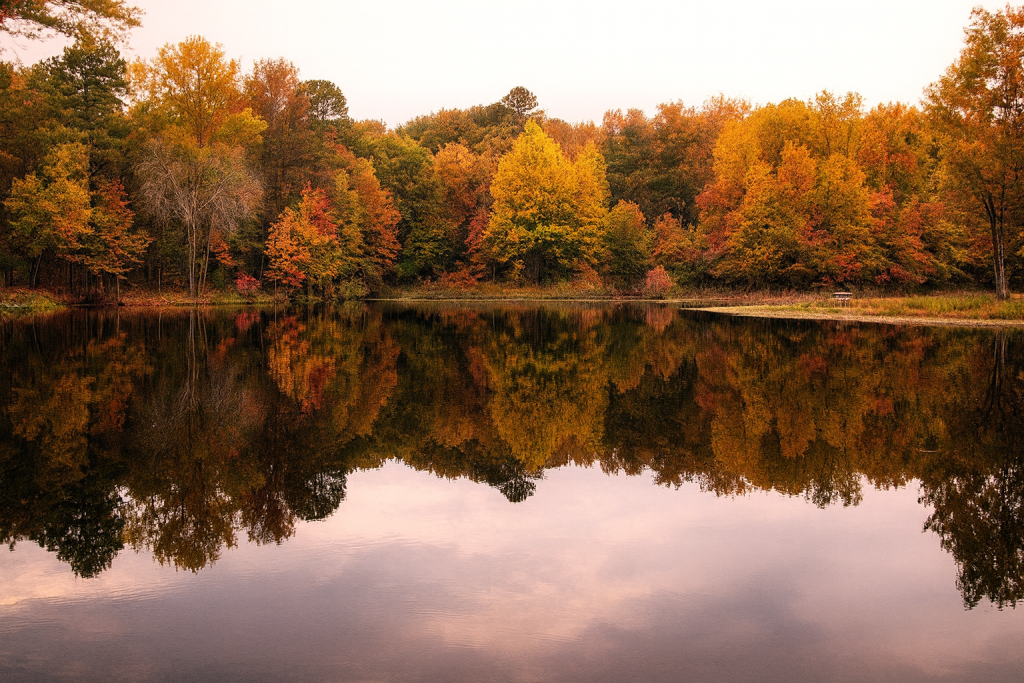
As summer fades, pond conditions begin to shift. If you’re not proactive in late summer and early fall, you risk muck buildup, oxygen crashes, and unwanted spring growth. Here’s how to get your pond ready for fall the right way.
This blog outlines the most important fall pond maintenance tasks for Texas pond owners, including algae and weed cleanup, muck control, and shoreline inspections.
By acting now, you reduce the risk of costly spring problems and protect the health of your pond, fish, and surrounding property all year long.
In Texas, fall doesn’t always mean crisp air and early leaf drop. Instead, we see lingering heat, flash rain, and stressed aquatic ecosystems.
That’s why late summer to early fall is a critical window for pond maintenance. If you wait until winter, it may be too late to:
Address overgrown vegetation or nutrient overload
Prevent fall leaf litter from fueling muck and algae
Help fish recover from summer stress
Stabilize shoreline zones before winter runoff
Preparing now means your pond enters winter in balance—and wakes up healthier next spring.
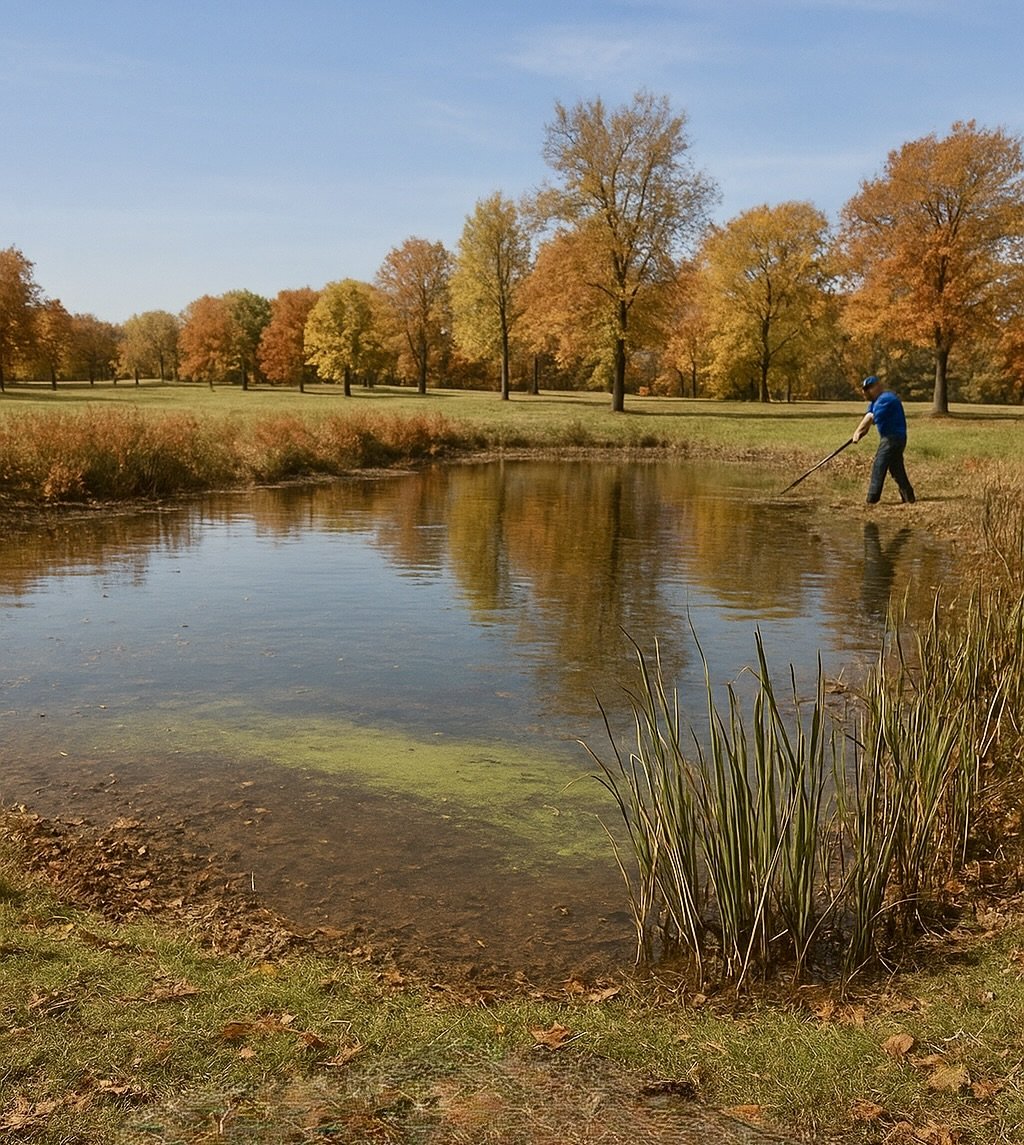
Leaving decaying plant material in the pond during fall means one thing: nutrient loading. As leaves, algae, and weeds break down, they:
Release phosphorus and nitrogen
Feed next season’s algae blooms
Create muck and reduce water clarity
Lower oxygen levels as they decompose
Manual removal, spot-treatments (if permitted), and skimming of leaves and debris can make a big difference this time of year.
While large-scale overflows are uncommon in Texas ponds, it’s still important to inspect your pond’s inlets, culverts, and water entry points in the fall.
Look for:
Clogged or blocked inlets caused by grass, cattails, or summer debris
Silted-up low areas that reduce water circulation
Undermined or eroded zones where water enters the pond
Areas where livestock or vehicles may have disturbed water edges
By clearing vegetation, reshaping eroded entries, and managing sediment flow, you can improve winter water quality and help prevent isolated flooding or shoreline damage during localized storms.
Muck and sludge don’t disappear in winter—they sit, break down slowly, and release nutrients all season long. Fall is the best time to begin:
Biological muck reducers (bacteria treatments)
Shoreline cleanup to remove sediment and detritus
Spot dredging if problem areas are shallow and unmanageable
A proactive fall muck reduction strategy helps restore pond depth and clarity.
Fish are often stressed after summer due to low oxygen, heat, and crowding. Going into fall, help them recover by:
Avoiding sudden treatments (especially algaecides or dyes without proper aeration)
Feeding appropriately and tapering as temperatures fall
Ensuring good circulation and water movement where possible
Your fish will overwinter better if they’re not already struggling.
Now is the time to trim overgrown shoreline vegetation and check for erosion or instability. Look for:
Slumping or receding edges
Exposed roots or muddy zones
Areas where livestock or vehicles access the pond
Simple fall adjustments can prevent winter runoff damage and help reseed or replant buffers in spring.
At Highland Pond Management, we help property owners across Texas transition their ponds safely into winter with:
Seasonal vegetation cleanup
Biological muck reduction
Erosion control and shoreline work
Overflow inspections and repair
Don’t wait for spring problems—let’s fix them now.
Schedule your fall pond service today or contact us for a custom fall assessment.
