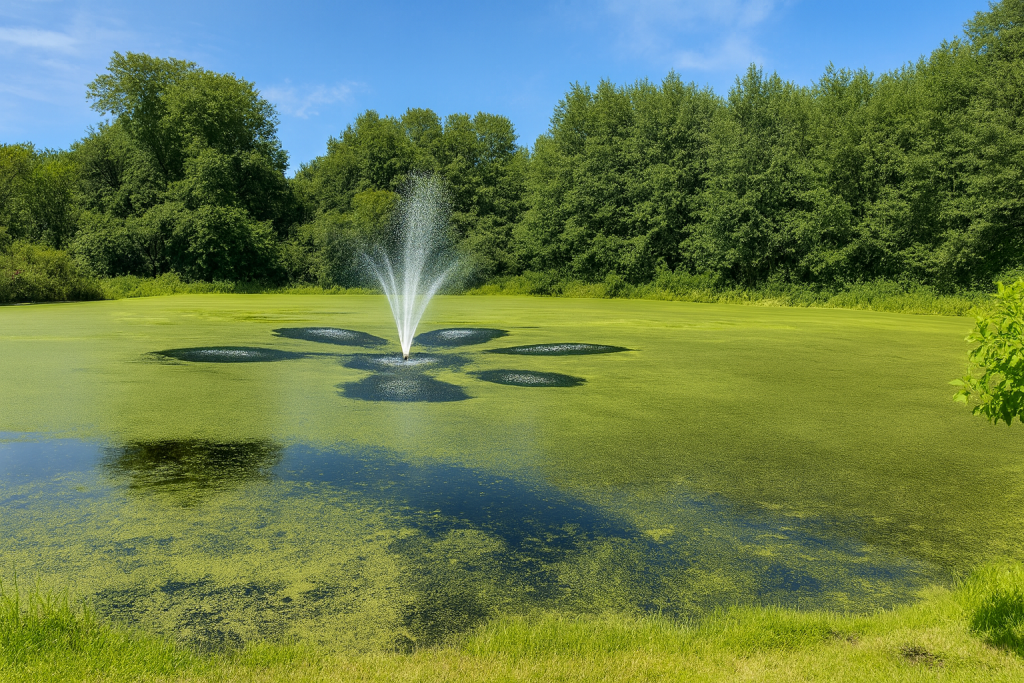
Duckweed and watermeal are two of the most common surface weeds in Texas ponds — and two of the most frustrating. Many pond owners assume they’re the same plant, but the truth is:
Duckweed is manageable. Watermeal is the real problem.
Identifying which one you have is the difference between a quick fix and a long, stubborn battle. This guide breaks down what each plant looks like, how it spreads, and what you can realistically expect when it comes to control.
By tinting your pond’s water, dye limits the penetration of sunlight, which aquatic weeds and algae need to thrive. This light filter creates less favorable conditions for nuisance growth and also helps maintain more stable water temperatures. The result is a clearer, healthier pond that looks better and requires less maintenance. It’s especially useful for ponds exposed to full Texas sun for most of the day.
Quick Summary — The Fast Difference
• Duckweed: Has tiny leaves, visible roots, and is easier to manage.
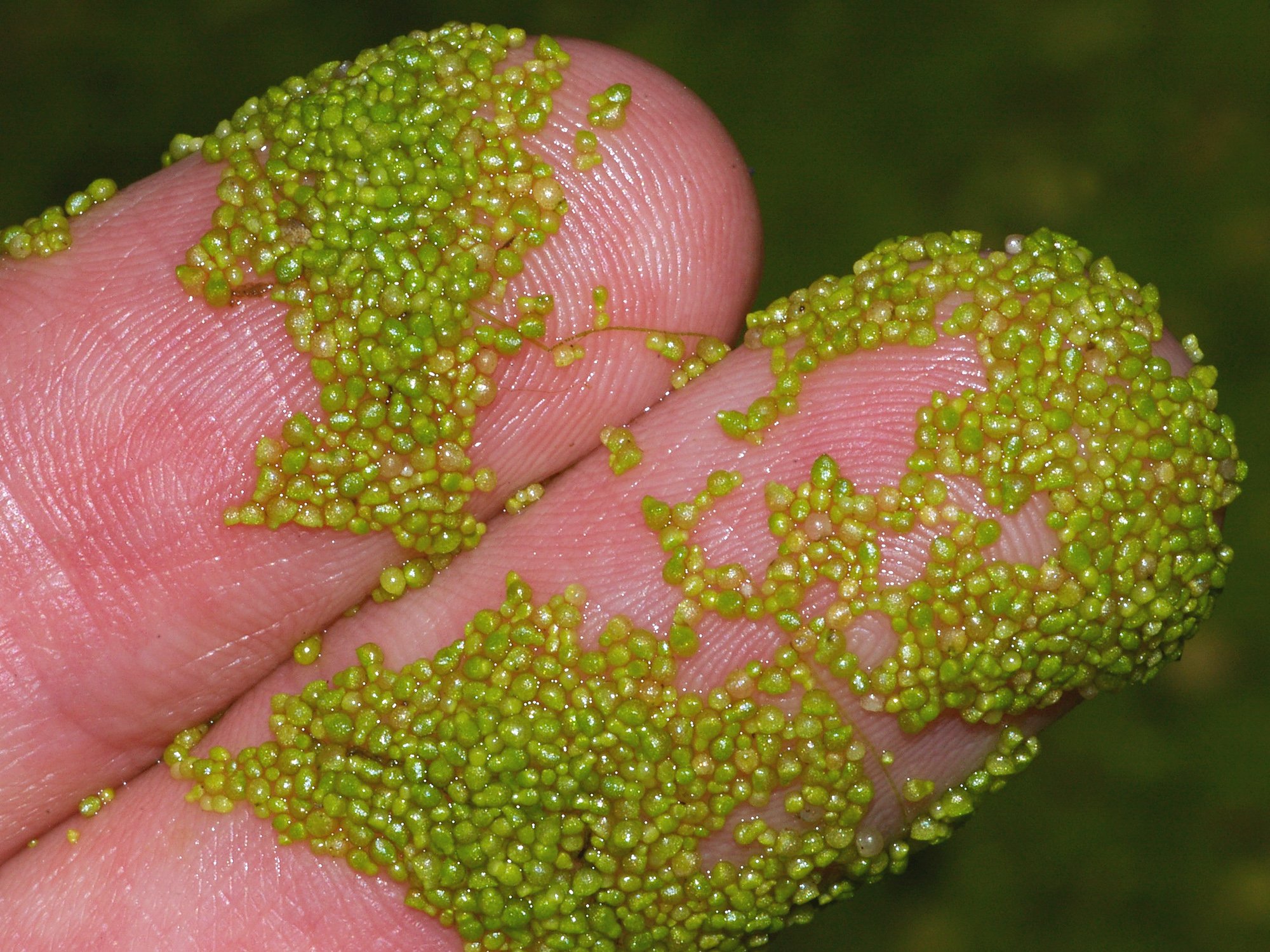
• Watermeal: No leaves, no roots, grain-like, and extremely difficult to control.
• If it looks like floating green sand or fish food pellets — it's watermeal.
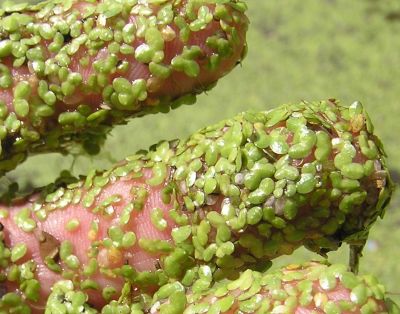
Duckweed is a floating plant with small, round leaves (called “fronds”). It usually appears in clusters and drifts with the wind.
Tiny green leaves, usually 2–5 mm wide
One thin, hair-like root dangling downward
Often forms sheets or clusters on the surface
Moves around the pond with wind patterns
Duckweed multiplies quickly but responds reliably to the right treatments.
Duckweed is a floating plant with small, round leaves (called “fronds”). It usually appears in clusters and drifts with the wind.
Tiny green leaves, usually 2–5 mm wide
One thin, hair-like root dangling downward
Often forms sheets or clusters on the surface
Moves around the pond with wind patterns
Duckweed multiplies quickly but responds reliably to the right treatments.
Watermeal survives even harsh conditions and spreads through tiny, resilient reproductive structures.
Ultra-small size makes mechanical removal nearly impossible
Resistant to many typical pond treatments
Can survive under duckweed layers
Quickly recolonizes after partial treatments
Most ponds with heavy watermeal require a multi-stage management plan.
Both species spread fast — but watermeal is much more aggressive.
Wind movement
New fronds forming from parent plants
Birds carrying fragments between ponds
Microscopic budding
Dense colonies that survive winter in pond muck
Reproductive granules easily transferred by wildlife
Highland Pond Management treats small ponds across Texas and uses strategies tailored to each species.
Targeted aquatic herbicides formulated for surface-floating plants
Aeration improvements to disrupt stagnant areas
Nutrient reduction to slow regrowth
Watermeal requires a stronger, more persistent approach:
Specialized herbicides that target ultra-small plants
Repeat-season applications for full suppression
Reducing excessive nutrients that fuel regrowth
Improving circulation in stagnant coves or corners
Most watermeal ponds need a seasonal plan rather than a one-time treatment.
You should schedule an evaluation if you notice:
Rapidly spreading surface coverage
Surface weeds returning shortly after DIY treatments
A gritty, sand-like layer that doesn’t skim off easily
Fish struggling at the surface due to low oxygen
Early intervention prevents full pond coverage — especially during hot months.
Whether you’re dealing with duckweed or stubborn watermeal in the Texas Hill Country, correctly identifying the plant is step one. Effective control comes from a plan tailored to your pond’s size, depth, flow patterns, and nutrient load.
📞 Call Highland Pond Management
(830) 914-2306
Get a quick diagnosis and a treatment plan that actually works.
