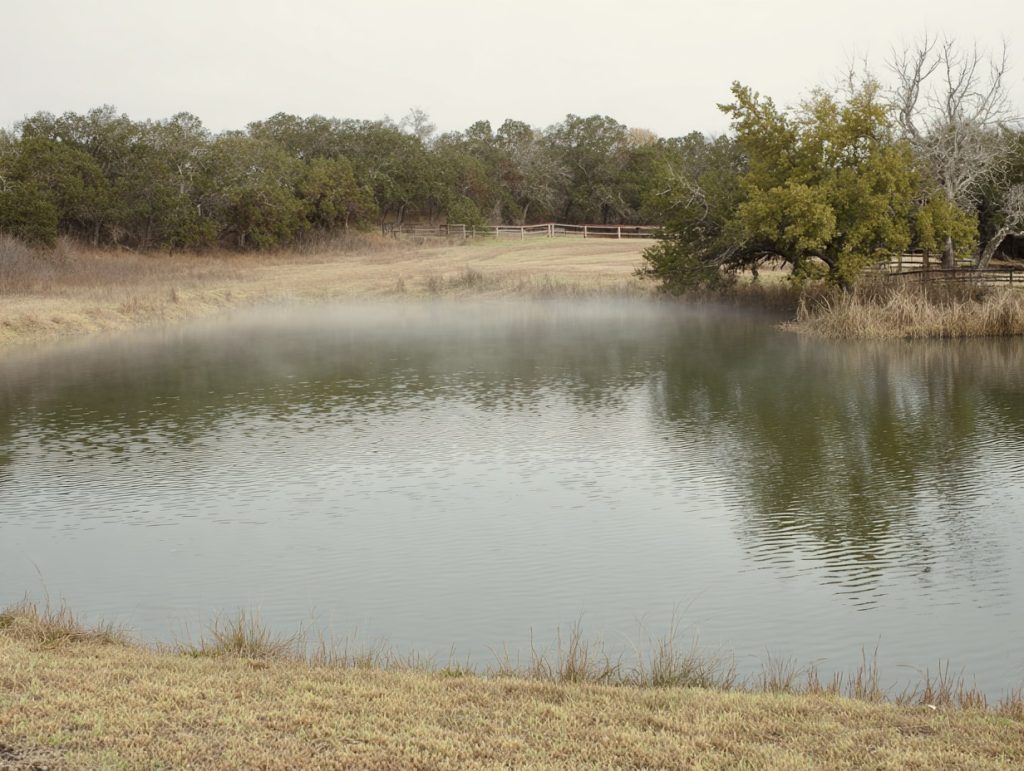
During winter, many Texas pond owners stop seeing fish altogether. No surface activity. No feeding response. No movement along the shoreline. It’s natural to wonder whether the fish are still alive — or if something has gone wrong beneath the surface.
In most cases, this lack of visible activity is completely normal. Pond fish don’t hibernate, but they do slow down dramatically in cold water, spending more time deeper in the pond where temperatures are more stable. Understanding this behavior helps separate normal winter conditions from early warning signs that deserve attention.
Quick Summary — Winter Fish Behavior • Fish do not hibernate, but they slow down significantly in winter • It’s normal to stop seeing fish at the surface during cold months • Lack of activity does not automatically mean fish loss • True winter fish problems often show up later, not immediately
As water temperatures drop, fish conserve energy. Their metabolism slows, and they reduce unnecessary movement.
In winter, healthy pond fish typically:
Move into deeper, more stable water
Spend long periods inactive near the bottom
Avoid the surface except during brief warm spells
This behavior is a survival strategy, not a sign of distress.
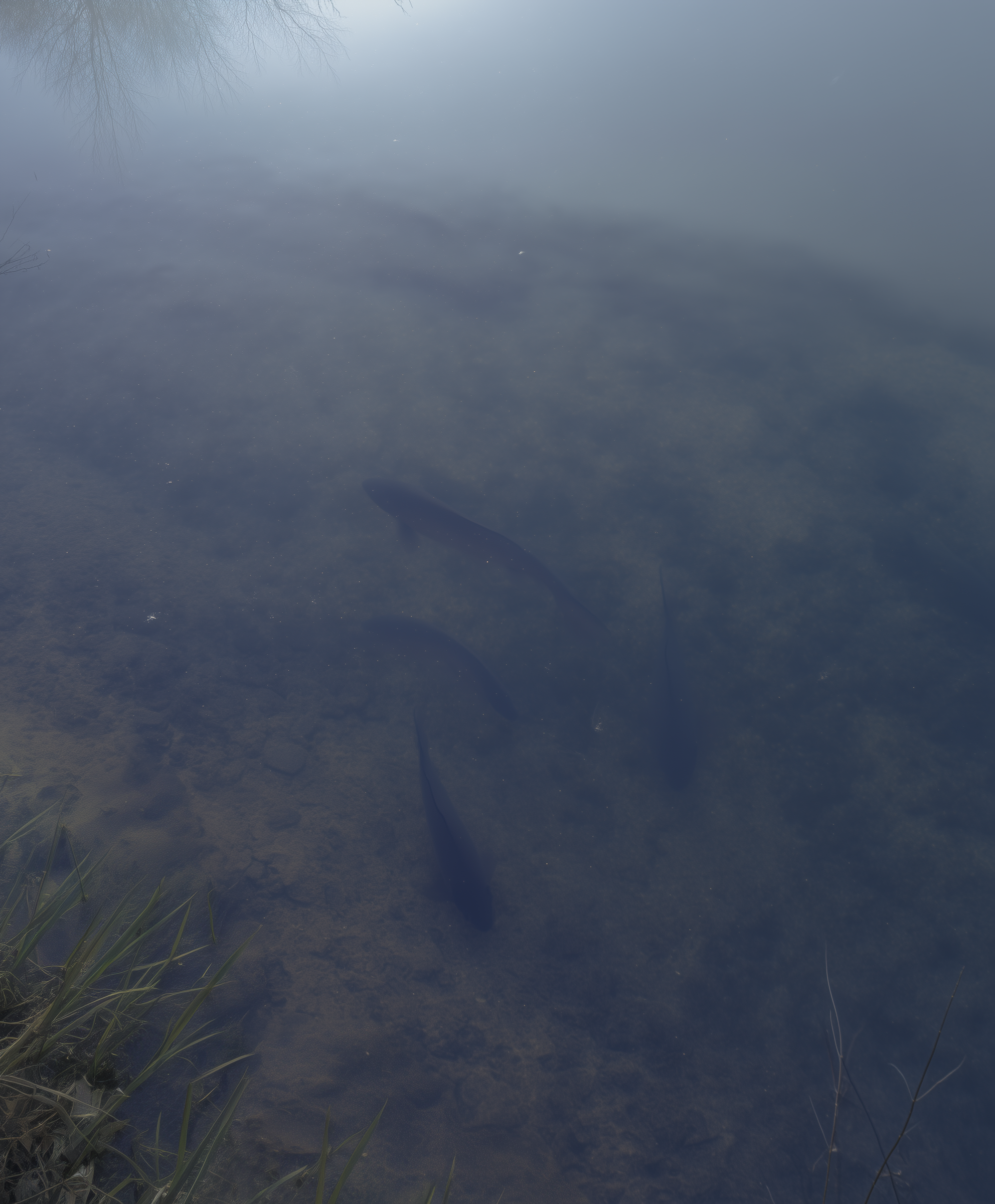
Surface visibility is misleading in winter. Cold water holds more oxygen, so fish no longer need to visit the surface as frequently. At the same time, clearer winter water often creates the illusion that fish have disappeared — when in reality, they’ve simply shifted location.
Even on sunny winter afternoons, brief surface activity doesn’t mean fish are feeding or active long-term. Once temperatures drop again overnight, fish return to deeper water.
While inactivity is normal, there are situations that warrant closer attention.
Potential warning signs include:
Persistent foul odors coming from the pond
Thick organic buildup or black sludge along the bottom
Fish gasping at the surface during cold weather
Sudden changes following major runoff or debris input
These issues usually point to water quality or oxygen stress, not temperature alone.
In many ponds, fish losses don’t become obvious until spring. Cold water masks symptoms, slows decomposition, and delays visible signs.
When water warms:
Oxygen demand rises
Decomposition accelerates
Nutrient buildup becomes active
That’s why many spring fish kills or algae outbreaks actually trace back to winter conditions, not spring weather.
Rather than trying to force activity, winter pond care should focus on observation and stability:
Avoid unnecessary feeding or treatments
Keep leaves and debris out of the pond
Watch for odors or unusual water changes
Plan proactive maintenance before spring warming
Calm monitoring now prevents rushed decisions later.
Winter is a quiet phase, but it sets the stage for everything that follows. Ponds that remain stable through winter typically recover faster and perform better when temperatures rise.
Highland Pond Management helps Hill Country pond owners understand what’s normal — and identify issues early, before they escalate in spring.
Reach out to discuss winter observations or plan ahead for the upcoming season.
