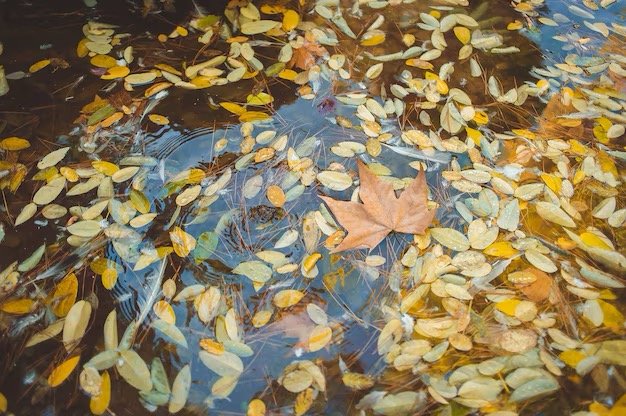
Fall in the Texas Hill Country paints the landscape with color — and drops thousands of leaves into local ponds. While this is natural, it’s not harmless. As leaves sink and decompose, they release nutrients, form muck, and create oxygen stress that threatens fish. Taking steps now can prevent winter problems and set your pond up for a healthier spring.
Quick Guide: Fall Leaves in Texas Ponds
Problem: Leaves sink and decay, creating muck at the bottom of your pond.
Result: Nutrient overload → algae growth, weed outbreaks, oxygen depletion.
Warning Signs: Murky water, rotten-egg (sulfur) odors, sludge at the shoreline.
Solutions: Regular skimming/cleanup, beneficial bacteria treatments, pond dye for light control, and steady aeration.
Best Timing: Act in fall before decomposition accelerates over winter.
A few leaves floating on the water may not seem like much. But in the Hill Country, where oak, pecan, and sycamore trees drop leaves in massive numbers, ponds can collect hundreds of pounds of debris in just a few weeks. Once leaves sink, they don’t just disappear — they settle into a sludge layer that slowly eats away at your pond’s health.
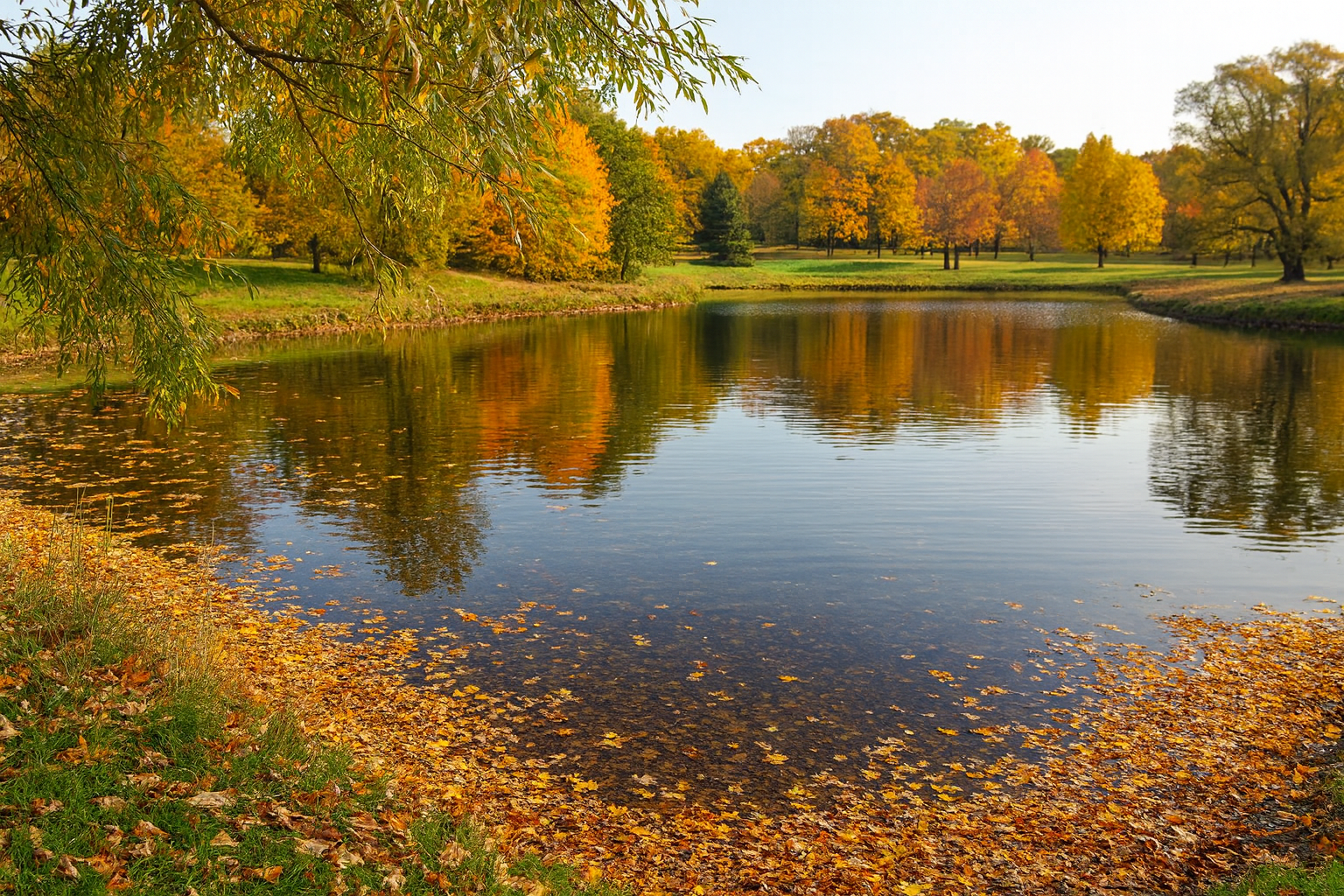
Nutrient release: As leaves decompose, they release nitrogen and phosphorus. These nutrients fuel algae blooms and weed growth in spring.
Muck buildup: Layer after layer of decayed matter creates a bottom blanket of muck, making your pond shallower and harder to maintain.
Oxygen stress: Decomposition consumes dissolved oxygen. Too many leaves can lower oxygen levels enough to stress or kill fish.
Sulfur smell: Rotten-egg odors around your shoreline are a clear sign that decomposition is overwhelming your pond’s natural balance.
Cloudy or tea-colored water after windy days.
Foul or musty odors near shorelines.
A soft, dark sludge forming along pond edges.
Fish gasping at the surface after storms.
These early signs are often ignored — until problems escalate in late winter or early spring.
Manually remove leaf piles where possible. Even a few hours of raking and disposal in high-debris areas can drastically cut future muck buildup.
Adding bacteria helps accelerate decomposition naturally, breaking down leaf debris before it becomes muck. Unlike chemical approaches, bacteria improve water balance safely for fish and wildlife.
Bottom diffused aeration systems keep water circulating, helping oxygen reach the bottom layers where leaves are decaying. Aeration also reduces the likelihood of oxygen crashes during mild fall or early winter turnovers.
Dye reduces light penetration, slowing algae growth fueled by leaf-released nutrients. It also keeps ponds visually attractive during the off-season.
Waiting until winter is too late. Once leaves are fully decomposed, nutrients are already released and muck is harder to manage. Early fall action prevents problems instead of trying to correct them later.
If your pond has heavy tree cover, noticeable shoreline muck, or persistent odors, professional help can keep things from worsening. Highland Pond Management provides seasonal cleanups, beneficial bacteria programs, and aeration solutions tailored for Hill Country ponds.
Don’t let leaves turn into next year’s muck and algae. The right treatments now make spring cleaner, clearer, and healthier.
Contact Highland Pond Management today for fall pond cleanup, aeration checks, and water-quality treatments.
