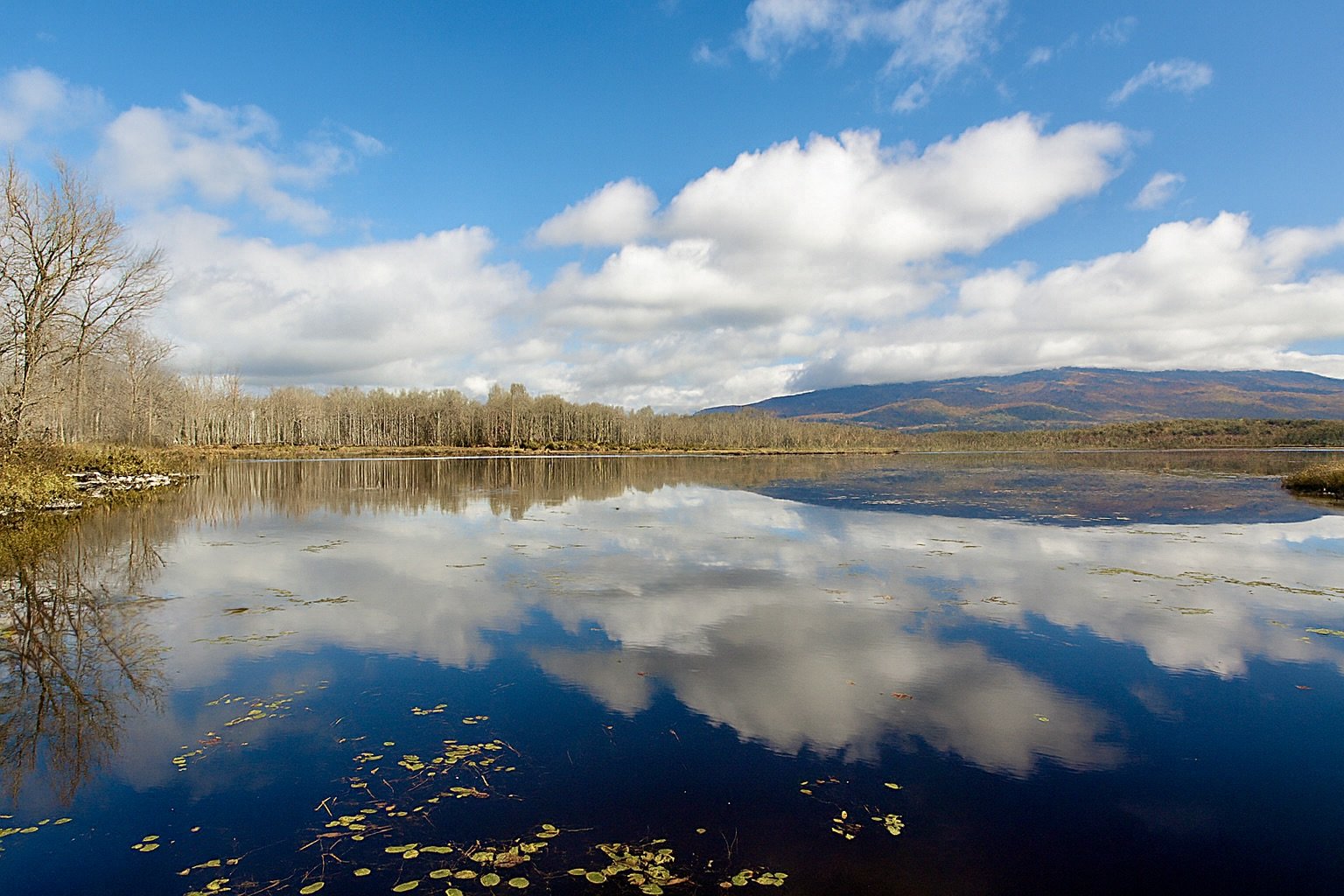
Oxygen levels, bacteria, and fish activity are all shifting as the ecosystem prepares for winter. Understanding these quiet transitions helps you protect your pond’s health through the colder months and ensures a faster recovery when spring returns.
Did You Know? Your pond never truly “shuts down” in winter — it simply shifts gears. Beneficial bacteria continue working, just more slowly, breaking down organic waste at the bottom where oxygen levels are lowest. If too many leaves and nutrients settle before the cold sets in, those areas can go anaerobic — producing gases and setting the stage for early spring algae blooms. By ensuring oxygen circulation and reducing debris now, you’re giving your pond the best possible start for a clean, balanced spring.
As fall turns to winter, pond water begins cooling from the surface downward. Cooler water can hold more oxygen, which benefits fish — but only if your pond remains properly circulated.
At the same time, bacteria slow their metabolism, meaning organic material decomposes more slowly and nutrients linger longer in the water column.
Key changes include:
Higher oxygen capacity (beneficial, but only if mixed evenly)
Reduced decomposition speed (organic matter breaks down slower)
Stable temperature gradients (water mixes less actively without wind or aeration)
💡 Winter prep is about balance — not activity. You’re setting the stage for stability, not growth.
Even when your pond looks dormant, it’s still alive with subtle processes.
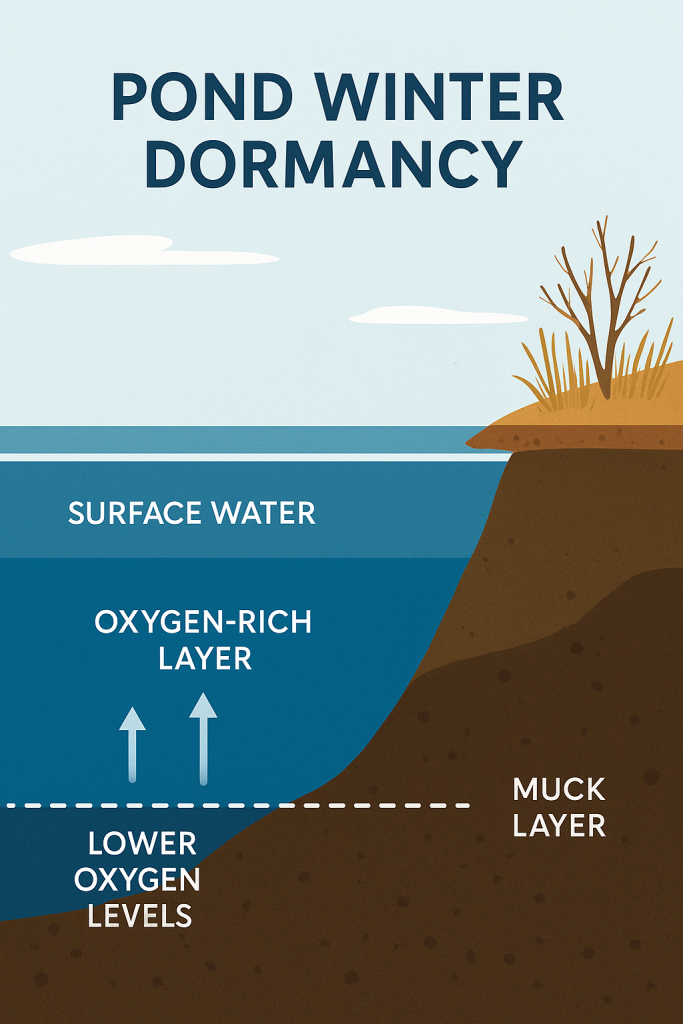
Beneficial bacteria continue digesting waste at reduced speed.
Invertebrates survive in sediment, feeding on organic matter.
Fish slow their metabolism and retreat to deeper, stable zones.
Gases like methane and hydrogen sulfide can accumulate in thick muck layers when oxygen drops.
That’s why fall cleanup and circulation checks are essential before the pond goes fully still.
If leaves, sticks, and debris stay in your pond through winter, they trap nutrients that fuel spring algae blooms.
Even small amounts of organic debris can create nutrient “hot spots” under the ice or surface film, setting up water quality problems later.
Proper cleanup before dormancy helps prevent:
Oxygen depletion during still winter days
Excessive muck buildup
Early spring water discoloration and odor
You don’t need major interventions this time of year — just small actions that prevent imbalance later.
✅ Skim or net leaves before they sink.
✅ Check fountains or diffusers to ensure light circulation continues.
✅ Avoid fertilizing or feeding fish — both add unnecessary nutrients.
✅ Apply a final beneficial bacteria treatment if water temperatures are above 50°F.
Each of these steps keeps your pond stable through the slow season and gives beneficial microbes the oxygen they need to finish their job.
Smart actions in late fall can dramatically reduce the time and cost of spring restoration.
By entering winter clean and balanced, you’ll see clearer water, stronger fish populations, and fewer algae outbreaks when temperatures rise again.
Winter care isn’t about doing more — it’s about timing.
Nature rewards preparation.
Seasonal changes remind us that Texas ponds are dynamic, living systems — constantly adjusting and self-regulating.
So when your pond slows down this winter, it isn’t “dead.” It’s resting, recycling nutrients, and preparing for the next growth cycle.
🌿 The best-managed ponds aren’t busy year-round — they’re balanced year-round.
At Highland Pond Management, we help Hill Country landowners keep their ponds healthy through every season.
Whether you need pre-winter cleanup, water quality monitoring, or advice on long-term balance, our team is here to help.
Serving the Texas Hill Country with professional pond management, seasonal care, and water-quality expertise.
