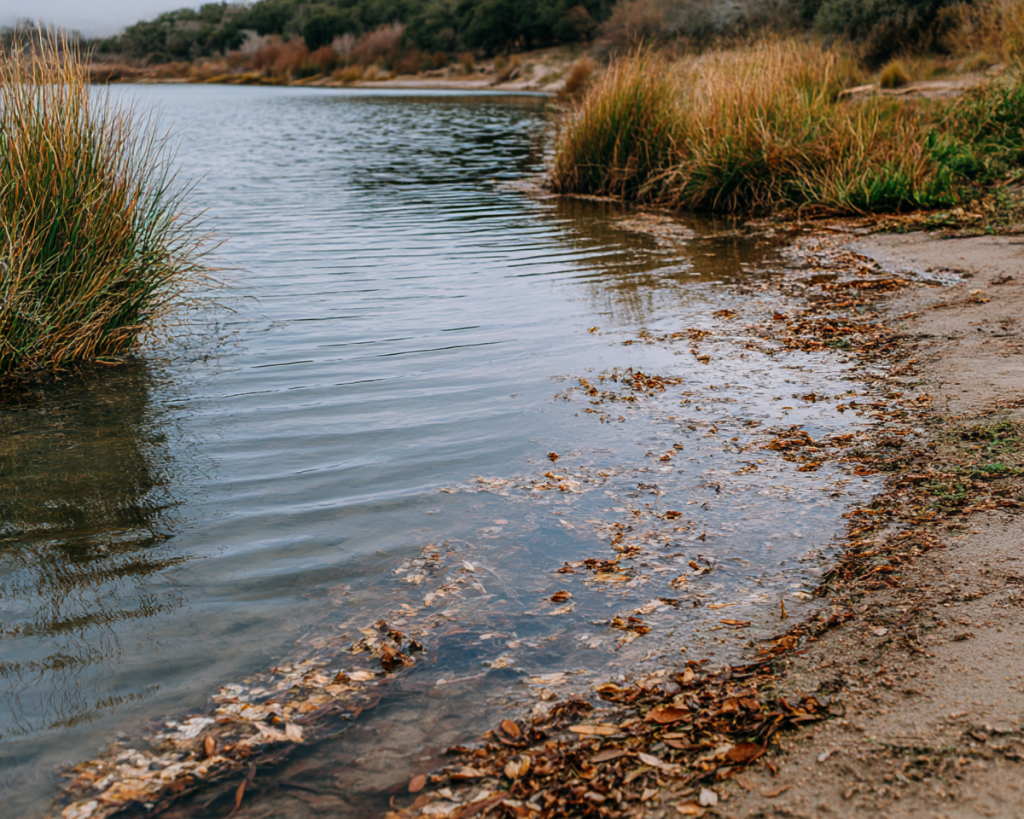
A little organic layer is normal. But when muck gets thick, it becomes a constant oxygen drain, fuels algae, and creates that stale, swampy smell that never fully goes away.
This guide shows you how to tell what you’re dealing with — and which solutions actually reduce muck (versus temporary cosmetic fixes).
Muck becomes a real problem when it gets thick, soft, and oxygen-hungry. The easiest DIY check is a “muck stick” test near the shoreline and a few deeper spots. Long-term reduction usually requires a combo of nutrient control + oxygen support + targeted biological breakdown (not just one quick product).
Want us to assess depth + organic load? Call (830) 914-2306 orCLICK TO CALL NOW
“Muck” is a mix of decomposing leaves, dead algae, fish waste, grass clippings, and fine sediment that settles into a soft, dark layer.
In many Texas ponds, muck builds faster because:
Long growing season = more plant/algae production
Wind blows leaves and organic debris into coves
Runoff carries nutrients and soil into the basin
Warm water accelerates decomposition and oxygen demand
Here’s the key: as muck decomposes, it consumes oxygen — especially at the bottom where water exchange is already limited.
You don’t need fancy equipment.
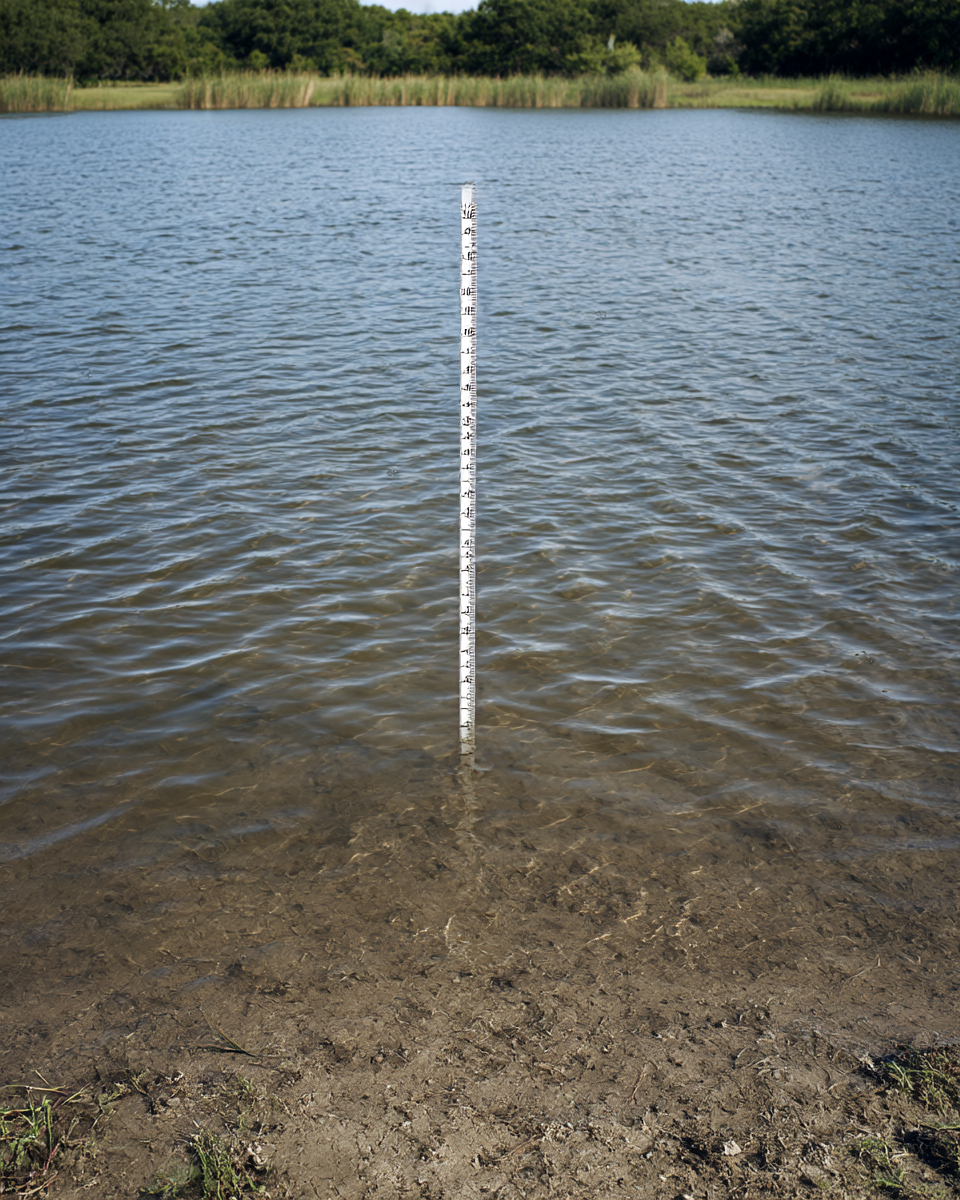
Use a rake handle, PVC pipe, or sturdy pole and test multiple areas:
2–3 shallow shoreline spots
1–2 mid-depth areas (if accessible)
1 cove / downwind corner (muck “collector” zone)
What you’re feeling for:
Normal: a thin layer, firmer bottom underneath
Problem muck: pole sinks easily into a soft layer, feels like pudding
Severe: you can push down several inches (or more) before hitting firm bottom
Tip: Pull it up and smell it.
Earthy / pondy smell: normal organics
Rotten egg / sewer smell: low-oxygen / anaerobic conditions
If you have a safe, gradual shoreline:
Step carefully in very shallow water
See if you sink into soft muck
If you’re sinking quickly, it’s a sign the organic layer is thick.
If you pull up material that’s black, stringy, and smears easily, that’s often anaerobic muck.
Muck doesn’t always show itself directly — it shows up as recurring symptoms:
Persistent odor (especially mornings)
Algae that “keeps coming back” even after treatment
Fish hanging near inflows or surface gulping on still mornings
Murky water that never quite clears
Thick mats of decaying shoreline debris
Muck isn’t just “gross.” It changes how your pond behaves.
It steals oxygen 24/7 as it decomposes
It stores nutrients and releases them back into the water column
It creates anaerobic zones that produce odors and stress fish
It makes algae treatments less predictable (algae dies → more decay → more oxygen demand)
In other words: muck is a multiplier. It amplifies other pond problems.
There’s no single magic fix. The best results come from combining the right tools.
If the pond keeps getting loaded with organics and nutrients, muck will keep rebuilding.
Start with the high-impact basics:
Keep grass clippings and leaves out of the water
Clean up shoreline debris before it sinks
Reduce fertilizer drift and runoff
Stabilize bare soil areas that wash into the pond
Oxygen is the gatekeeper.
When oxygen is available, organic matter breaks down more efficiently and with fewer odor issues.
Aeration can improve oxygen distribution
Better circulation reduces stagnant “dead zones”
Learn more about oxygen support and circulation here: Pond Aeration for Texas Hill Country Important: Aeration is not “instant muck removal.” It supports the biology that reduces it over time.
Biological products can help — when the pond conditions support them.
They work best when:
Oxygen is adequate
Water temps are in a productive range
Nutrient inputs are controlled
The pond isn’t constantly reloading with new debris
This is where most DIY attempts fail: people add bacteria while the pond stays oxygen-starved and overfed with nutrients.
If muck is extremely deep, biological reduction may be too slow.
Dredging can be appropriate when:
You have years of accumulation
Bottom depth has noticeably decreased
Shoreline is turning into soft marsh
You need a “reset” for pond capacity and performance
It’s the most expensive option — but sometimes it’s the most truthful one.
One-time “shock” fixes without oxygen support
Treating algae repeatedly without addressing decay load
Adding products while runoff continues
Assuming muck disappears in weeks
Muck reduction is usually measured in months, not days.
Most ponds don’t have the same muck depth everywhere.
Common heavy zones:
Downwind corners
Coves with floating debris buildup
Inflow areas after storms
Shallow flats where vegetation dies back seasonally
If you target these zones first (cleanup + oxygen strategy), you get faster visible improvement.
If you’re consistently sinking into a soft layer and pulling up black, smelly material — it’s worth addressing.
Aeration supports decomposition and can reduce accumulation over time, but it’s not instant removal.
Oxygen is typically lowest near dawn. Anaerobic zones release stronger odors when oxygen is depleted.
Indirectly, yes. Muck increases oxygen demand and can contribute to low-oxygen events, especially during warm spells or after algae die-offs.
If your pond has recurring algae, stubborn odors, or soft “pudding bottom” areas, muck is probably a big part of the story.
The most cost-effective path usually looks like this:
Reduce inputs (debris + runoff)
Support oxygen (aeration / circulation)
Use biological tools strategically
Consider physical removal only when the pond needs a reset
We can estimate muck severity, identify your worst zones, and build a realistic reduction plan based on depth and organic load.
Call (830) 914-2306 or contact Highland Pond Management.
