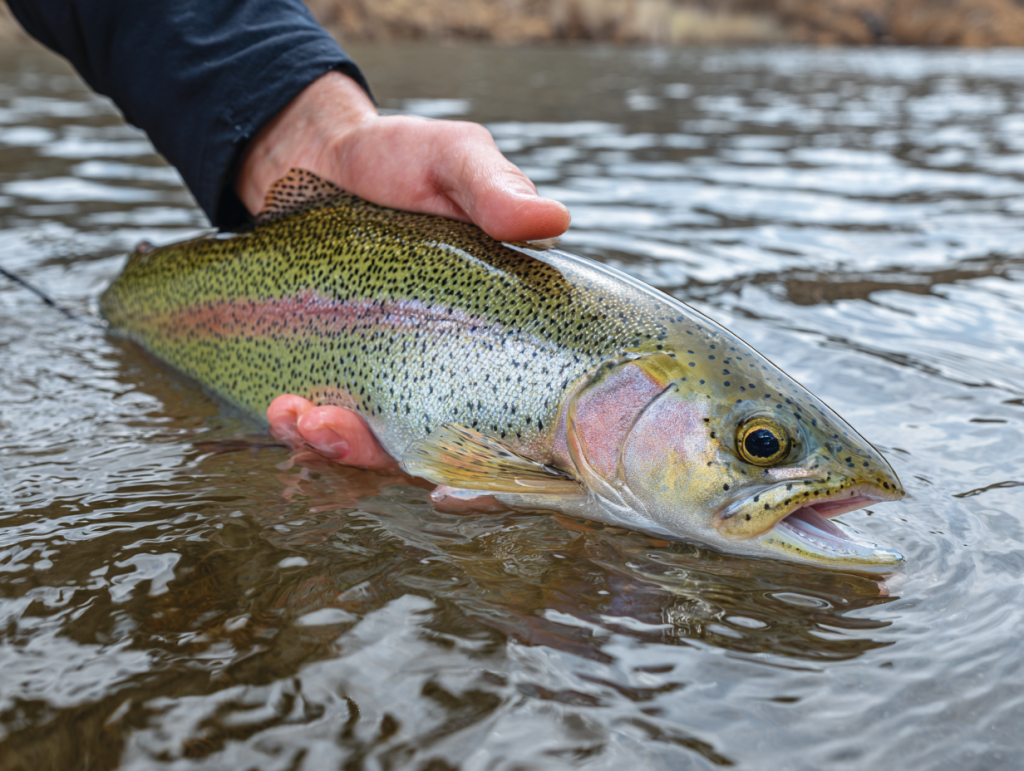
Rainbow trout give you fast action and great table fare without committing your pond to a year-round coldwater program. But trout success in Texas comes down to two things: temperature timing and stable oxygen—especially during late-winter warm spells. The key is simple: time it right and manage oxygen and feeding through winter warm spells.
Quick Summary: Trout are a winter-only fish in Texas. Stock after consistent cold water, prioritize oxygen (aeration helps), feed lightly, and plan to harvest before spring warm-up.
Call-to-buy help (stocking + feed + aeration):
Tell us your pond size and average depth and we’ll recommend a realistic trout plan. Call (830) 914-2306.
CLICK TO CALL NOW
Yes—as a seasonal winter fish.
Rainbow trout thrive in cold, well-oxygenated water. In most Texas ponds, they’re stocked in the cool season and harvested before spring warms the water.
The goal: a great winter fishery, not a year-round trout pond.
Most ponds do best when trout are stocked after the pond has cooled consistently.
A practical rule:
Stock when water temps are reliably cool (not just one cold front)
Plan to harvest before spring warm-up
If you’re seeing big day-to-night swings, wait. Trout handle cold better than heat.
Stocking rate depends on:
If you want a baseline stocking framework (and what to measure first), start here: The Ultimate Guide to Fish Stocking in Texas Ponds
Stocking rate depends on:
Pond size (surface acres)
Average depth (how quickly it warms)
Aeration (oxygen stability)
Your goal (catch-and-release vs. harvest)
A safe approach is to stock conservatively, then scale up next winter once you know how your pond behaves.
Quick-start rule: If you’re unsure, start light. You can always stock more next season—replacing dead trout gets expensive fast.
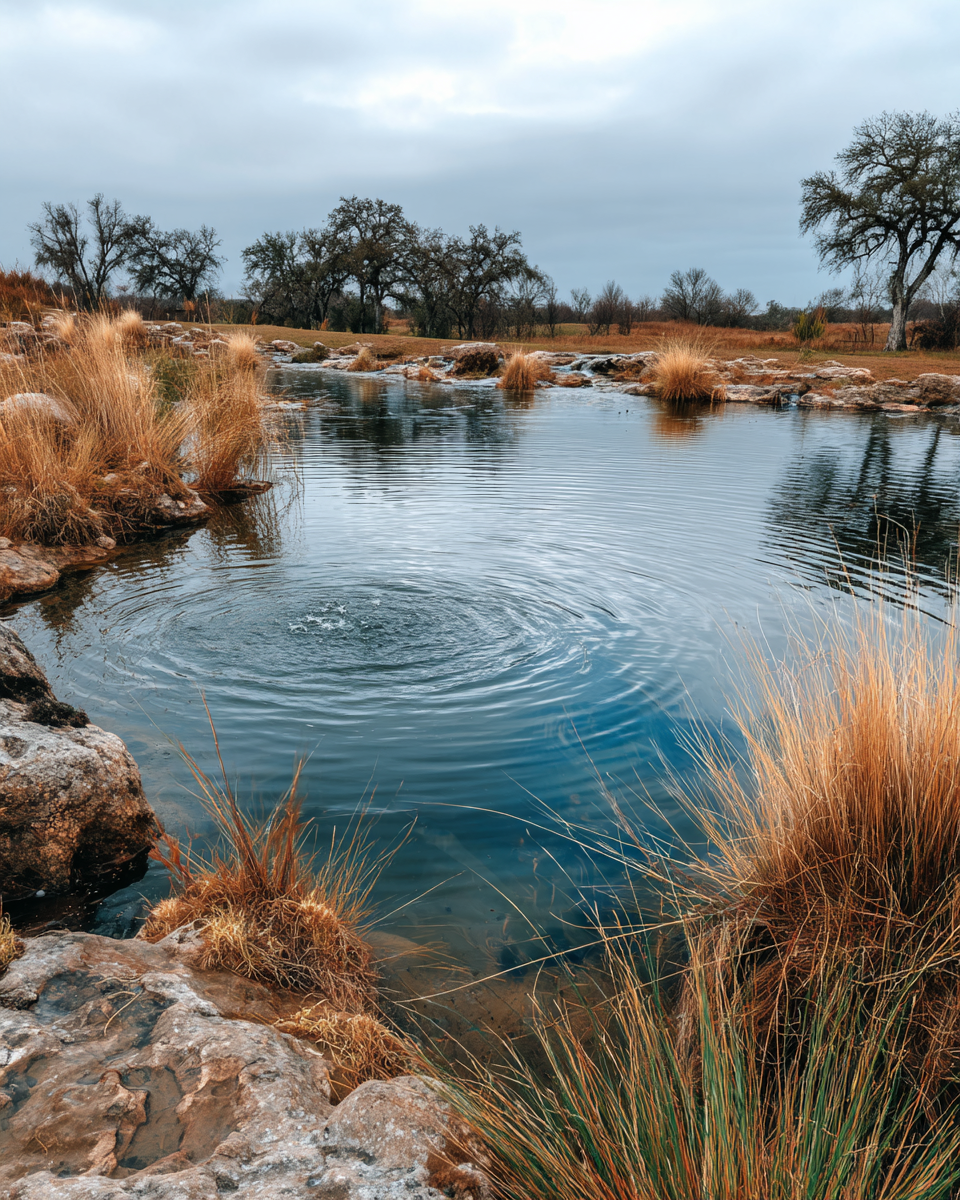
Trout begin struggling as water warms. Shallow ponds warm quickly—especially in sunny, wind-sheltered basins.
Trout are oxygen-hungry. The risk spikes when:
A warm spell hits in late winter
The pond has heavy organic muck
The pond is already carrying algae / decay
Aeration makes trout more forgiving. Without it, your margin for error is thin.
Trout can tolerate a range of conditions, but they do poorly in ponds with:
strong “swamp” odor / heavy muck
recurring winter algae blooms
low circulation areas
If your pond is already stressed, trout won’t magically fix it.
Most of the time: yes.
If you want the deeper “why,” read: Pond Aeration for Texas Hill Country
Aeration helps by:
stabilizing dissolved oxygen
preventing dead zones
reducing risk during warm spells
improving feed conversion (healthier fish)
Exception: If your pond is extremely shallow and you have ice risk (rare in much of Texas), the setup needs to be evaluated. In most Highland-region winters, aeration is a net positive.
If you’re unsure: ask us. Trout + aeration is powerful, but the diffuser placement and run-time matters.
Trout grow fast when fed correctly.
Use a high-protein floating trout feed
Feed small amounts and watch how fast it disappears
Adjust with weather (less feed during warm spells)
Overfeed “because they’re biting”
Dump feed in cold snaps when activity drops
Let uneaten pellets sink and rot (that fuels oxygen demand)
A simple rule: If they aren’t cleaning it up quickly, you’re feeding too much.
They’ll still hunt insects and small forage, but in many Texas ponds, growth is limited without supplemental feed.
If your goal is:
big, fast growth → feed is your friend
light stocking + occasional catches → feed is optional (but still helpful)
If you routinely fight low oxygen, muck, or “swamp smell,” fix that first (or run aeration) so trout don’t become an expensive stress test. Start here: How We Reduce Pond Muck in Texas Hill Country
Plan your season like this:
Stock in consistent cool water
Enjoy the fishery through winter
Harvest hard before spring warm-up
Once water temps climb, trout stress increases quickly. If you want to avoid losses, don’t wait for “one more month.”
Stocking too early (a warm fall ruins you)
No aeration on a pond that already runs low oxygen
Overfeeding during warm spells
Stocking heavy without understanding your pond’s winter behavior
Ignoring muck / decay (oxygen demand doesn’t disappear in winter)
Trout are a great fit if you have:
at least moderate depth (deeper is better)
decent water clarity and circulation
the ability to run aeration (or the pond naturally stays oxygenated)
a realistic harvest plan
If your pond is very shallow, nutrient-loaded, or prone to winter algae, you may still be able to do trout—but it needs a tighter plan.
Want a straight answer? Call (830) 914-2306 and tell us your pond size, approximate depth, and what the surface looks like right now.
Use this quick checklist to sanity-check your plan before you spend money on fish.
✅ Checklist Summary: Measure pond size and average depth, stock only after consistent cool water, keep oxygen stable (aeration helps), feed conservatively, and set a firm harvest window before spring warm-up.
If you want trout, we’ll help you set a plan that matches your pond—so you get the fun and the fillets without the avoidable losses.
You can also reach us here: Contact Highland Pond Management
Call Highland Pond Management: (830) 914-2306
