
As temperatures rise across Central Texas, many pond owners begin noticing falling water levels. While some water loss is completely normal during June, July, and August, excessive drops can signal underlying problems that become far more expensive if ignored.
What You'll Learn
How much water loss is normal during a Texas summer The difference between evaporation, seepage, and leaks Warning signs your pond may have a serious problem Why water level changes affect overall pond health When to monitor and when to take action
Many pond owners become concerned when they see their shoreline expanding or dock posts becoming more visible during summer.
In reality, every pond loses water through evaporation.
During periods of high temperatures, low humidity, wind, and little rainfall, ponds across Burnet, Marble Falls, Horseshoe Bay, Llano, and the surrounding Texas Hill Country can lose several inches of water each week.
The key is understanding what normal water loss looks like—and when it starts indicating a larger issue.
Evaporation occurs evenly across the entire pond surface.
You may notice:
If the water level stabilizes after rainfall or cooler temperatures return, evaporation is often the cause.
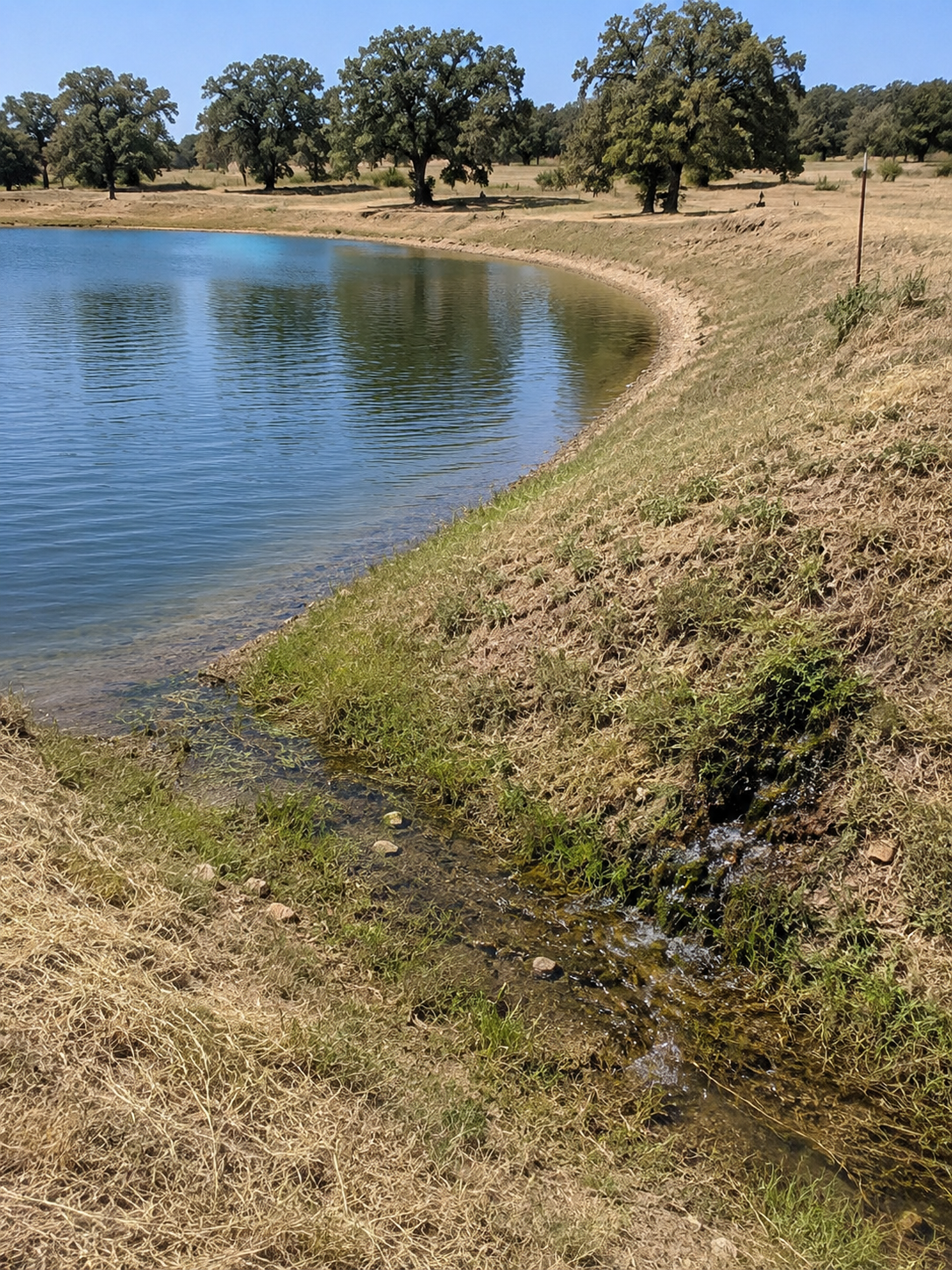
Leaks typically create different symptoms.
Watch for:
These signs often indicate seepage or structural issues that require further investigation.
Many pond owners focus on aesthetics when water levels drop, but declining water levels can affect the entire ecosystem.
As water volume decreases, fish and beneficial aquatic organisms have less available habitat.
Shallower water warms faster during summer, increasing stress on fish populations and potentially contributing to water quality issues.
When water volume decreases, nutrients become more concentrated. This can increase the likelihood of nuisance algae growth and other water quality challenges.
Many of the same conditions that contribute to declining water quality are discussed in our article on Why Some Ponds Struggle Year After Year While Others Stay Clear.
Lower water levels often mean warmer water and reduced oxygen availability.
During the hottest parts of summer, this combination can place significant stress on fish populations.
As ponds become shallower, stratification and oxygen-related issues can become more severe.
Learn more about this process in our guide to Pond Stratification and Why It Can Kill Fish in Late Summer.
Sunlight penetrates more of the water column as ponds become shallower, often creating ideal conditions for aquatic weeds and algae to expand.
Mark the water level against a dock post, pier support, stake, or other permanent structure.
Taking photographs from the same location each week can also help identify trends.
Record rainfall, temperatures, and major weather events before assuming a leak exists.
Many ponds lose water much faster during periods of intense heat and persistent wind.
Inspect the dam, shoreline, overflow structures, and surrounding property for signs of seepage, erosion, or unusual wet spots.
A few inches of water loss during a Central Texas summer is rarely cause for concern.
However, if your pond continues dropping rapidly, develops wet areas below the dam, or loses water regardless of rainfall and weather conditions, it’s worth investigating further.
The sooner problems are identified, the easier and less expensive they typically are to address.
Every pond experiences seasonal changes, especially during the heat of summer. The key is knowing the difference between normal evaporation and signs of a developing problem.
By monitoring water levels, understanding seasonal patterns, and paying attention to changes around your pond, you’ll be better prepared to protect its long-term health and avoid costly surprises.
Not sure whether you’re seeing normal summer evaporation or the early signs of a larger issue? Highland Pond Management helps property owners throughout Burnet, Marble Falls, Horseshoe Bay, Llano, and the surrounding Texas Hill Country evaluate pond health, identify potential problems, and develop practical long-term solutions.
