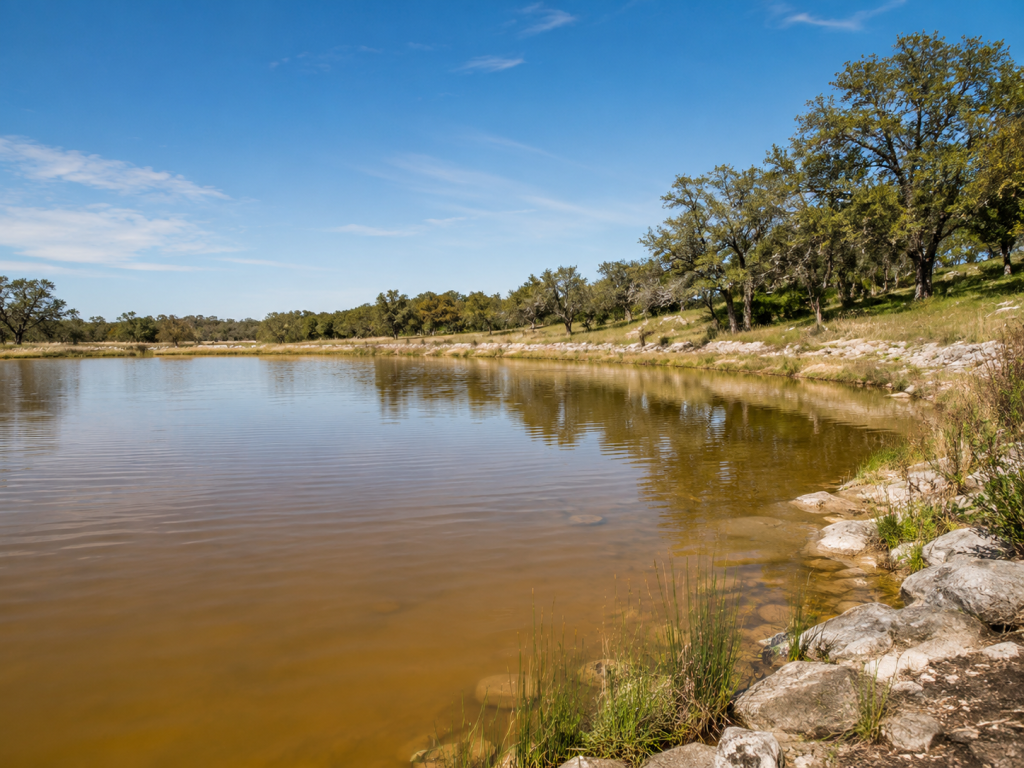
Brown pond water isn’t always a problem—but it should never be ignored. In Texas ponds, brown water can be caused by everything from heavy rain and suspended clay to pond turnover, organic debris, or declining water quality. The key is understanding why your pond changed color so you can avoid unnecessary treatments and catch more serious issues before they affect your fish and water quality.
Brown pond water can be caused by suspended clay, tannins from leaves, runoff after heavy rain, or deeper water mixing during pond turnover. The key is identifying which type of brown water you're seeing, because each has a different solution. Not sure what's causing it? Call (830) 914-2306 for a professional pond assessment.
Not all brown water looks the same.
Understanding the color and clarity of your pond is the first step toward identifying the cause.
Generally, brown water falls into one of four categories:
Each tells a different story.
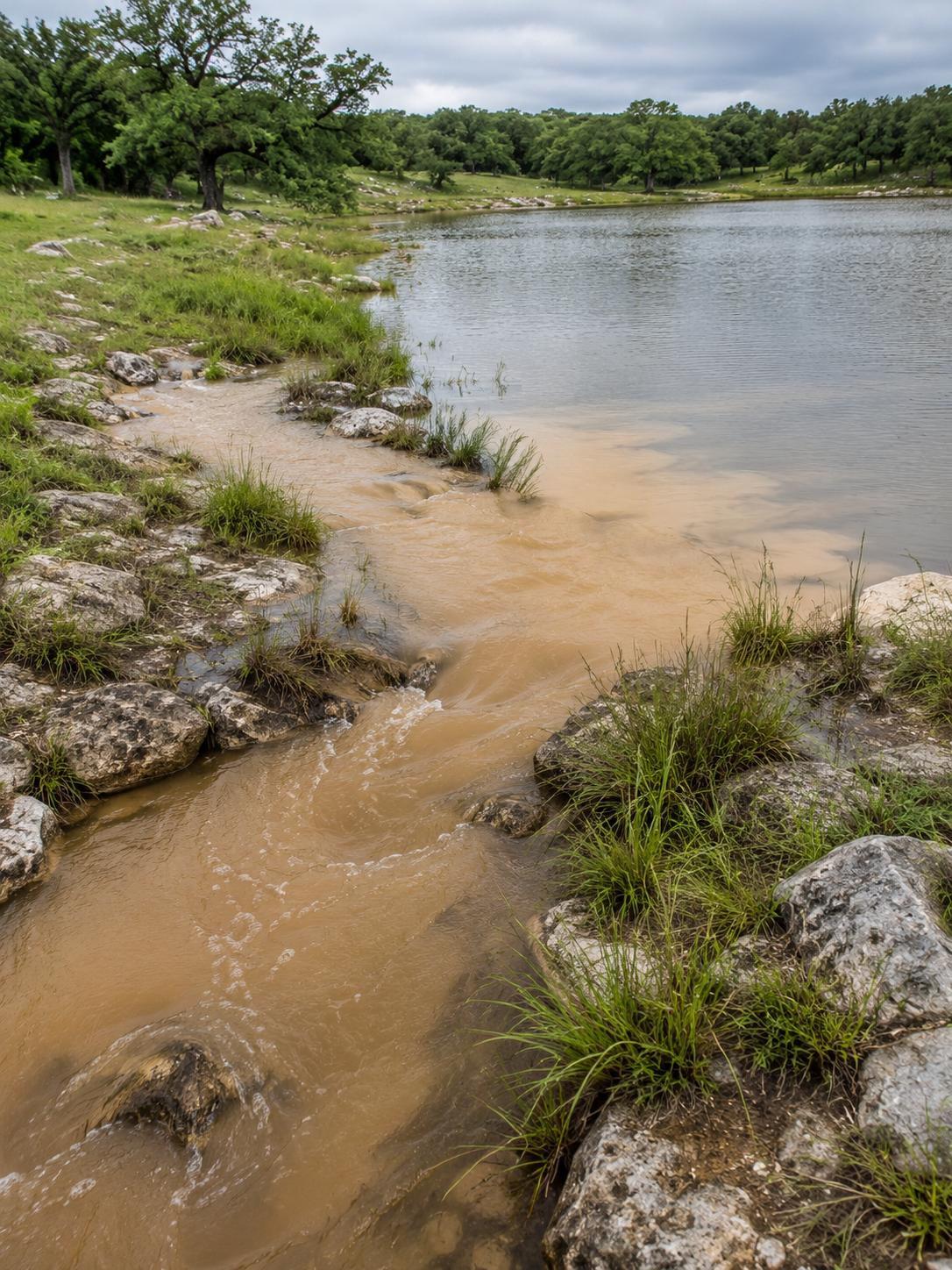
This is by far the most common type of brown water in Texas ponds.
After heavy rainfall, strong winds, livestock activity, or shoreline erosion, fine clay particles become suspended throughout the water column.
Typical signs include:
In many cases, the water will gradually clear as the particles settle.
However, if the pond remains muddy for weeks, shoreline erosion or continual runoff may be keeping sediment suspended.
Sometimes pond water develops a transparent brown appearance that resembles iced tea.
This is usually caused by natural tannins released from:
Unlike muddy water, tannin-stained water is often surprisingly clear.
Fish can usually still be seen beneath the surface.
Tannins are generally harmless but can indicate excessive organic debris entering the pond.
If the water is dark brown and accompanied by a musty or rotten egg smell, organic decomposition may be consuming oxygen.
Common contributors include:
This is when brown water deserves closer attention.
Low oxygen conditions can stress fish long before a fish kill occurs.
Many Texas ponds naturally stratify during warm weather.
As temperatures change, deeper oxygen-poor water can mix with the upper layers.
This process—known as pond turnover—can temporarily turn the water brown while bringing nutrients and organic material to the surface.
Other signs may include:
Learning how oxygen moves through your pond can help reduce these events.
Read more about Pond Aeration for Texas Hill Country.
Not immediately.
The best treatment depends entirely on the cause.
If it’s suspended clay:
If it’s tannins:
If it’s oxygen related:
Treating without identifying the cause often wastes both time and money.
Contact a pond professional if your pond:
Small problems are far easier—and less expensive—to correct before they become major water quality issues.
Brown pond water isn’t a diagnosis—it’s a symptom.
The color alone doesn’t tell the whole story, but understanding why your pond has turned brown allows you to choose the right solution instead of guessing.
Whether the cause is runoff, tannins, decomposition, or pond turnover, identifying the source early can help protect your fish, improve water quality, and avoid costly problems later.
We can identify what’s causing your pond to change color and recommend practical, long-term solutions that fit your pond—not a one-size-fits-all treatment.
Call (830) 914-2306 or Contact Highland Pond Management to schedule a pond evaluation.
No. Brown pond water is often temporary and completely natural. The cause determines whether treatment is necessary.
Usually, yes. However, if brown water is caused by oxygen depletion or pond turnover, fish may become stressed.
After a storm, muddy water often begins clearing within several days. If it remains muddy for weeks, there may be an ongoing erosion or runoff problem.
Aeration improves oxygen levels and can help prevent certain water quality problems associated with decomposition and pond turnover, but it is not a cure for suspended clay.
