
Hybrid Striped Bass: A Hard-Fighting Sportfish for Texas Ponds
Fast, Aggressive, and Built for the Right Texas Fishery
Largemouth bass may dominate conversations about Texas pond fishing, but they are not the only predator worth considering.
Hybrid striped bass offer something different. These powerful sportfish grow quickly, strike aggressively, and can provide an entirely different fishing experience in a well-managed pond.
For the right Texas pond, they can add recreational value and diversity. For the wrong pond, however, adding another predator can place unnecessary pressure on an already limited forage base.
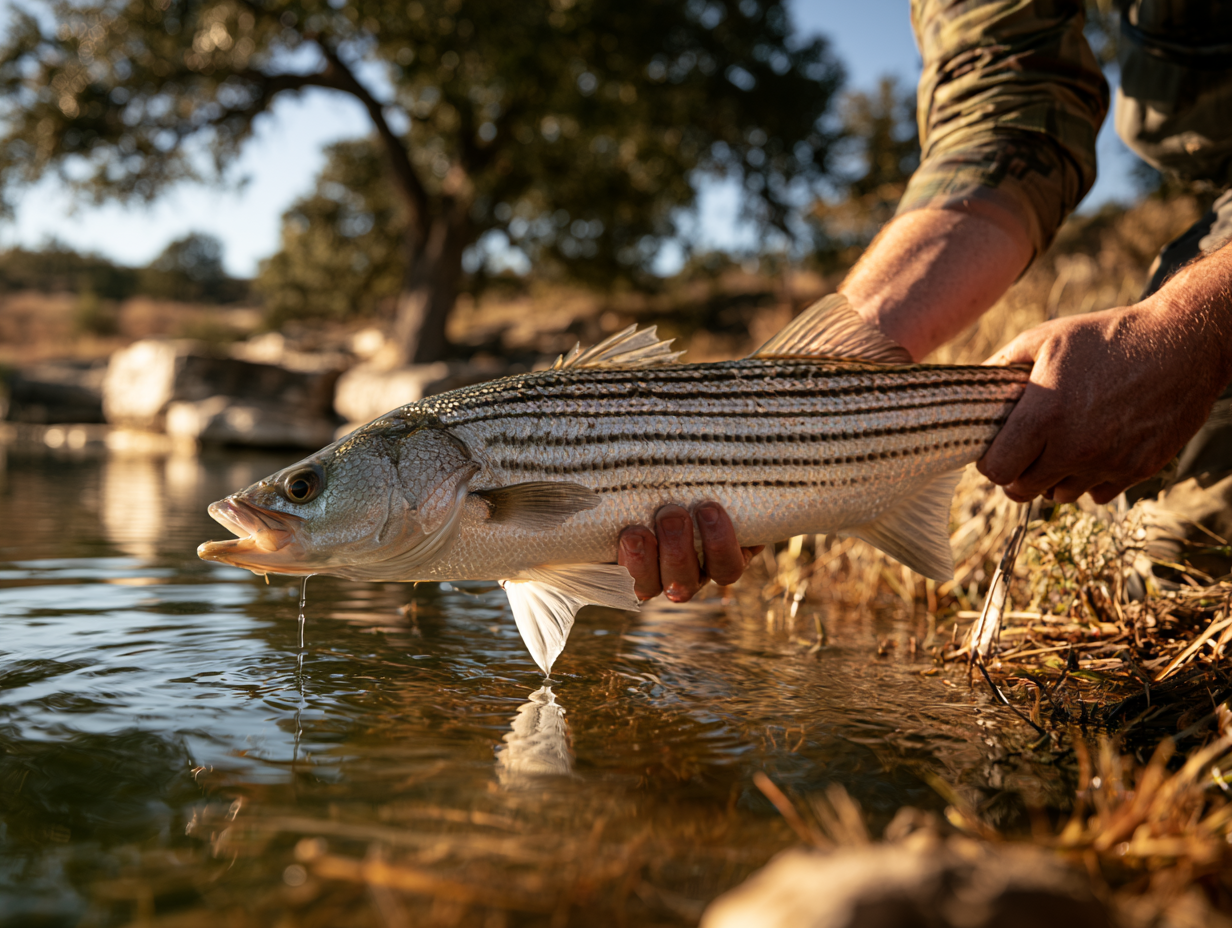
What Is a Hybrid Striped Bass?
A hybrid striped bass is a cross between a striped bass and a white bass.
Two common crosses exist. When a female striped bass is crossed with a male white bass, the resulting fish is commonly called a Palmetto bass. The reverse cross, using a female white bass and male striped bass, is often called a Sunshine bass.
Both are generally referred to simply as hybrid striped bass.
They have a deep, compressed silver body with dark horizontal stripes along their sides. Unlike the more continuous striping of a pure striped bass, the stripes on hybrids are often broken or irregular.
Texas Parks and Wildlife stocks striped bass and hybrid striped bass in public waters throughout the state, and hybrids have also become an option for private pond owners looking to diversify an established fishery.
Why Texas Pond Owners Like Hybrid Striped Bass
The biggest attraction is simple: they are exciting fish to catch.
Hybrid striped bass are fast, powerful swimmers that strike aggressively and can make long, hard runs once hooked. For pond owners interested in recreational fishing, they offer a very different experience from largemouth bass, bluegill, or channel catfish.
They also spend more time in open water than largemouth bass, so they can occupy a somewhat different niche within a larger pond.
They Can Grow Quickly
Hybrid striped bass are capable of strong growth when forage is abundant. Fish in the 2- to 5-pound range are common in managed fisheries, while larger fish are possible under favorable conditions.
Their growth depends heavily on food availability, stocking density, water quality, oxygen, and competition from other predators.
They Feed Aggressively
As they mature, hybrid striped bass rely heavily on small fish. In larger waters, shad can be an important forage species. In private ponds, the overall forage community must be capable of supporting both existing predators and any hybrids being added.
That appetite is one of the reasons they are so appealing as sportfish, but it is also one of the main reasons stocking them requires planning.
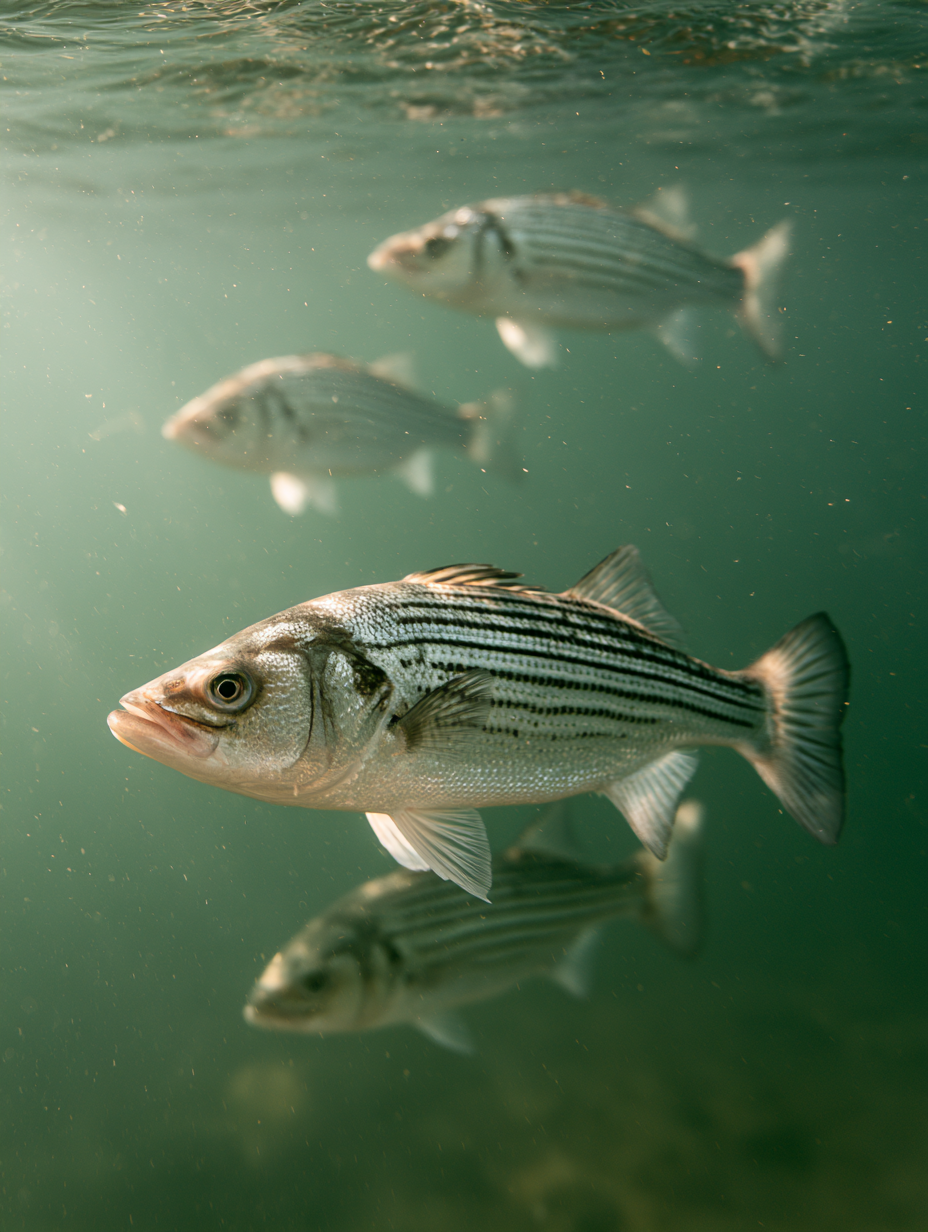
Hybrid Striped Bass Need a Strong Forage Base
Adding another predator to a pond without understanding the existing forage population can create more problems than it solves.
Hybrid striped bass can place additional pressure on bluegill, shad, minnows, and other prey species. A pond already producing thin largemouth bass or showing signs of limited forage generally does not improve simply because another aggressive predator is introduced.
Before stocking hybrids, evaluate:
- Existing predator numbers
- Bluegill and forage abundance
- Presence of shad or other open-water prey
- Average predator body condition
- Pond size and depth
- Long-term management goals
A successful fishery is built from the bottom of the food chain upward. The forage base needs to support the predators you already have before additional predators are introduced.
Are Hybrid Striped Bass Better Than Largemouth Bass?
No. They are simply different.
Largemouth bass remain the primary predator in many Texas ponds because they reproduce successfully, relate strongly to shoreline structure, and pair naturally with bluegill-based forage systems.
Hybrid striped bass are more commonly used as an additional sportfish rather than a replacement for largemouth bass.
If your goal is a traditional trophy bass fishery, largemouth bass will generally remain the centerpiece.
If your goal includes more variety, open-water fishing, aggressive strikes, and another type of predator, hybrids may be worth considering.
Do Hybrid Striped Bass Reproduce in Ponds?
Hybrid striped bass may reach sexual maturity, but successful natural recruitment in small private ponds is generally limited because they require very specific spawning conditions.
For practical pond management, owners should not expect a hybrid striped bass population to maintain itself indefinitely.
That can actually be an advantage.
Because natural recruitment is limited, managers can maintain more control over how many hybrid striped bass are present and restock intentionally when needed.
This makes them different from largemouth bass and bluegill, which can reproduce heavily and alter population balance over time.
Water Quality Matters More Than Many Pond Owners Realize
Hybrid striped bass are active fish with relatively high oxygen demands. That makes dissolved oxygen especially important during hot Texas summers.
Deep water alone does not guarantee good conditions. A deep pond with poor circulation can develop low-oxygen water near the bottom, while a shallow pond may warm rapidly and lose oxygen-holding capacity.
Before stocking hybrids, evaluate whether the pond has:
- Adequate depth
- Reliable summer dissolved oxygen
- Good circulation
- Appropriate aeration where needed
- Stable water quality
- Sufficient forage
Aeration can be particularly valuable in intensively managed fisheries because it supports circulation and more stable oxygen conditions throughout the pond.
When Is the Best Time to Stock Hybrid Striped Bass?
Cooler conditions generally reduce handling and transport stress compared with the hottest part of summer.
In the Texas Hill Country, fall can be an excellent time to assess fish populations and make stocking decisions.
However, the calendar should never be the only reason to add fish. Stocking decisions should be based on forage availability, predator balance, water quality, oxygen conditions, and the overall goals for the fishery.
Read more about fall fish stocking in Texas Hill Country ponds .
How Many Hybrid Striped Bass Should You Stock?
There is no universal stocking number that works for every private pond.
Stocking density should be determined by the pond itself and by the fish population already living there.
A private pond recommendation should consider:
- Pond acreage
- Average and maximum depth
- Existing largemouth bass abundance
- Forage density
- Desired harvest
- Fishing pressure
- Aeration and oxygen conditions
- Whether supplemental feeding is part of the management plan
Customized stocking plans are far more useful than copying a generic fish-per-acre formula from another pond or public reservoir.
Who Should Consider Hybrid Striped Bass?
Hybrid striped bass are strongest candidates for pond owners who:
- Want a more diverse sportfish population
- Enjoy aggressive, hard-fighting fish
- Have a larger or deeper pond
- Maintain strong forage populations
- Actively manage water quality and fish balance
- Are comfortable periodically restocking fish
They may be a poor choice for small, shallow, unmanaged ponds or fisheries already struggling with insufficient forage.
Build the Fishery Around the Pond, Not the Fish
It is easy to choose fish based on what sounds exciting to catch.
Successful pond management works in the opposite direction.
Start with the pond.
Evaluate its depth, oxygen, habitat, forage, existing predators, and management goals. Then choose the fish species that fit those conditions.
For the right Texas pond, hybrid striped bass can provide years of exciting fishing and create a sportfish experience that feels very different from a traditional largemouth bass pond.
For the wrong pond, they simply become another predator competing for limited resources.
The difference is planning.
Thinking About Adding a New Sportfish to Your Pond?
Hybrid striped bass can be an exciting addition to the right pond, but successful stocking starts with forage, water quality, oxygen, and the fish population already in place.
Highland Pond Management can evaluate your pond and build a stocking strategy around the fishery you actually want to create.
Call (830) 914-2306 or contact Highland Pond Management to schedule a pond evaluation.
Contact UsAre hybrid striped bass good for Texas ponds?
They can be excellent sportfish in larger, well-managed ponds with adequate forage, depth, dissolved oxygen, and water quality. They are not appropriate for every pond.
Will hybrid striped bass reproduce in my pond?
Natural recruitment in small private ponds is generally very limited. Pond owners should usually expect to restock hybrid striped bass periodically if they want to maintain the population.
Can hybrid striped bass live with largemouth bass?
Yes, in an appropriately managed fishery. Both species are predators, so the pond must have enough forage to support them without creating excessive competition.
Do hybrid striped bass need aeration?
Not every pond containing hybrids requires aeration, but reliable dissolved oxygen is important. Aeration can be valuable in ponds that experience summer oxygen problems, stratification, or intensive fish management.
How many hybrid striped bass should I stock?
There is no single stocking rate appropriate for every private pond. Pond size, depth, forage abundance, existing predators, oxygen conditions, and fishing goals should all be considered before determining a stocking number.