
Does Your Texas Pond Have Enough Fish Habitat? 7 Features That Build a Better Fishery
Stocking the Right Fish Is Only Half the Equation
A pond can have largemouth bass, bluegill, forage fish, good water quality, and even a carefully planned stocking program and still fall short of its potential as a fishery.
One reason is habitat.
Fish need more than water and food. They need places to spawn, feed, escape predators, ambush prey, and move between shallow and deeper water as conditions change.
The best Texas fishing ponds provide several different types of habitat rather than relying on one brush pile or a few rocks dropped near the bank.
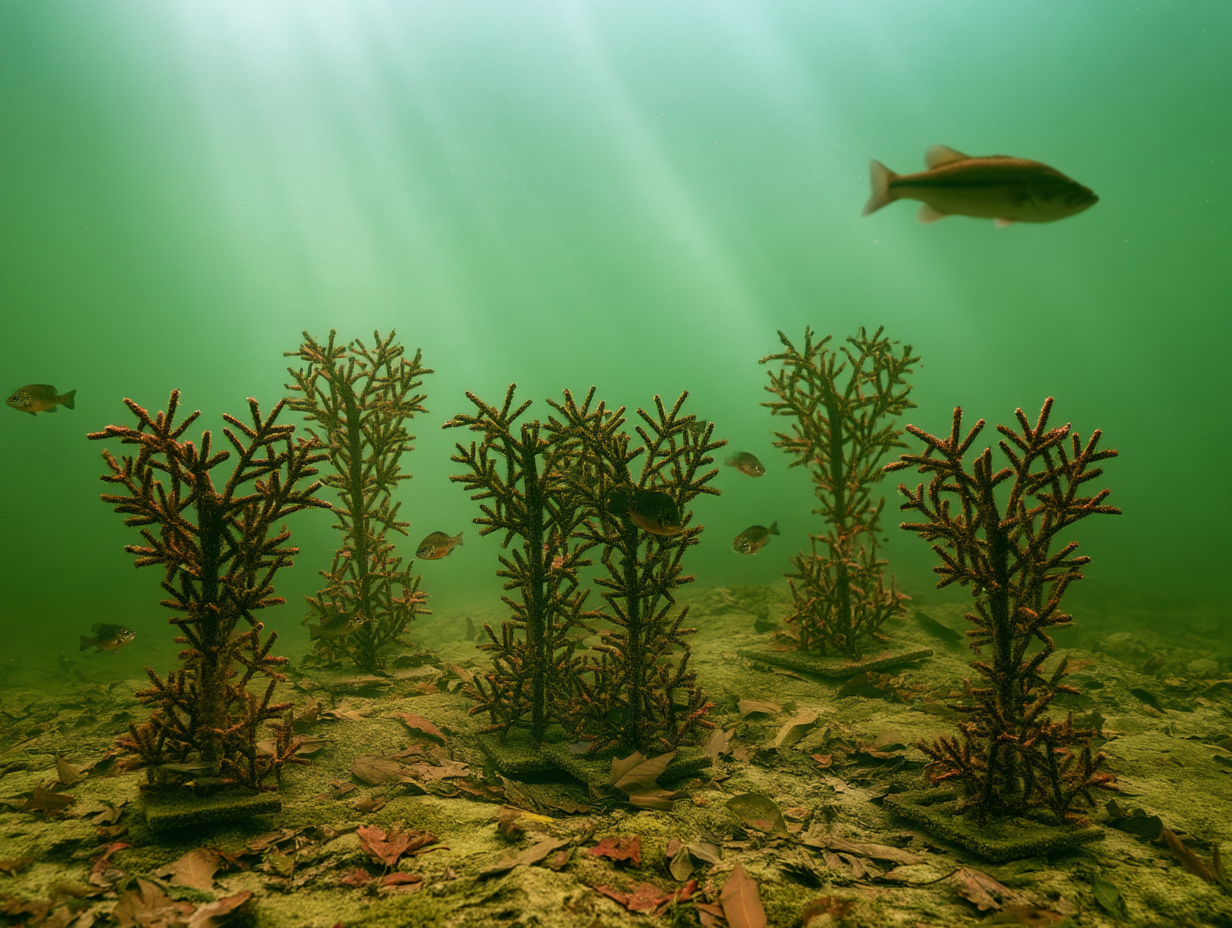
Why Fish Habitat Matters More Than Many Pond Owners Realize
In natural lakes, habitat develops over decades or centuries. Fallen trees enter the water. Rock outcrops create irregular bottom structure. Aquatic plants establish along shallow edges. Creek channels provide depth changes and travel routes.
A private pond may have far less structural diversity, particularly when it was constructed with smooth banks and a relatively uniform bottom.
That does not automatically make it a poor fishery. It does mean fish may have fewer places to carry out different parts of their life cycle.
Habitat becomes especially important when the objective is more than simply having fish present. If you want stronger bluegill recruitment, better bass growth, more predictable fishing locations, or a healthier predator-prey relationship, structure deserves a place in the management plan.
1. Shallow Spawning Areas for Bluegill and Other Sunfish
A good forage population starts with successful reproduction.
Bluegill commonly build nests in colonies in relatively shallow water when temperature and conditions are appropriate. Firm sand, gravel, or small aggregate can provide more usable spawning substrate than deep organic muck or unstable soft sediment.
These areas should not occupy the entire shoreline. Several well-positioned spawning zones can provide productive habitat while preserving other uses around the pond.
Protecting successful spawning matters because young bluegill eventually become part of the forage base that supports largemouth bass and other predators.
2. Dense Refuge for Small Forage Fish
Producing young fish is only useful if enough of them survive.
Newly hatched and juvenile bluegill, minnows, and other forage species need dense cover where larger predators cannot easily reach them.
This can come from aquatic vegetation, fine woody structure, branching artificial habitat, or other complex cover.
Refuge habitat is particularly useful near spawning areas because young fish do not have to cross large stretches of exposed water immediately after leaving shallow nursery zones.
The objective is not to protect every forage fish from predation. Predators need access to forage too. Good habitat simply allows enough young fish to survive and grow so the forage population remains productive.
3. Ambush Structure for Largemouth Bass
Largemouth bass are structure-oriented predators.
They often use edges, shade, changes in depth, vegetation, timber, rocks, and other structural transitions to position themselves near prey.
A pond with almost no structure may force predators to spend more energy roaming open water for food.
Good bass habitat can include:
- Submerged timber
- Rock piles
- Artificial branching structures
- Edges of aquatic vegetation
- Drop-offs and ledges
- Creek-channel transitions
Structure can also make fishing more predictable because anglers can target locations that naturally concentrate fish.
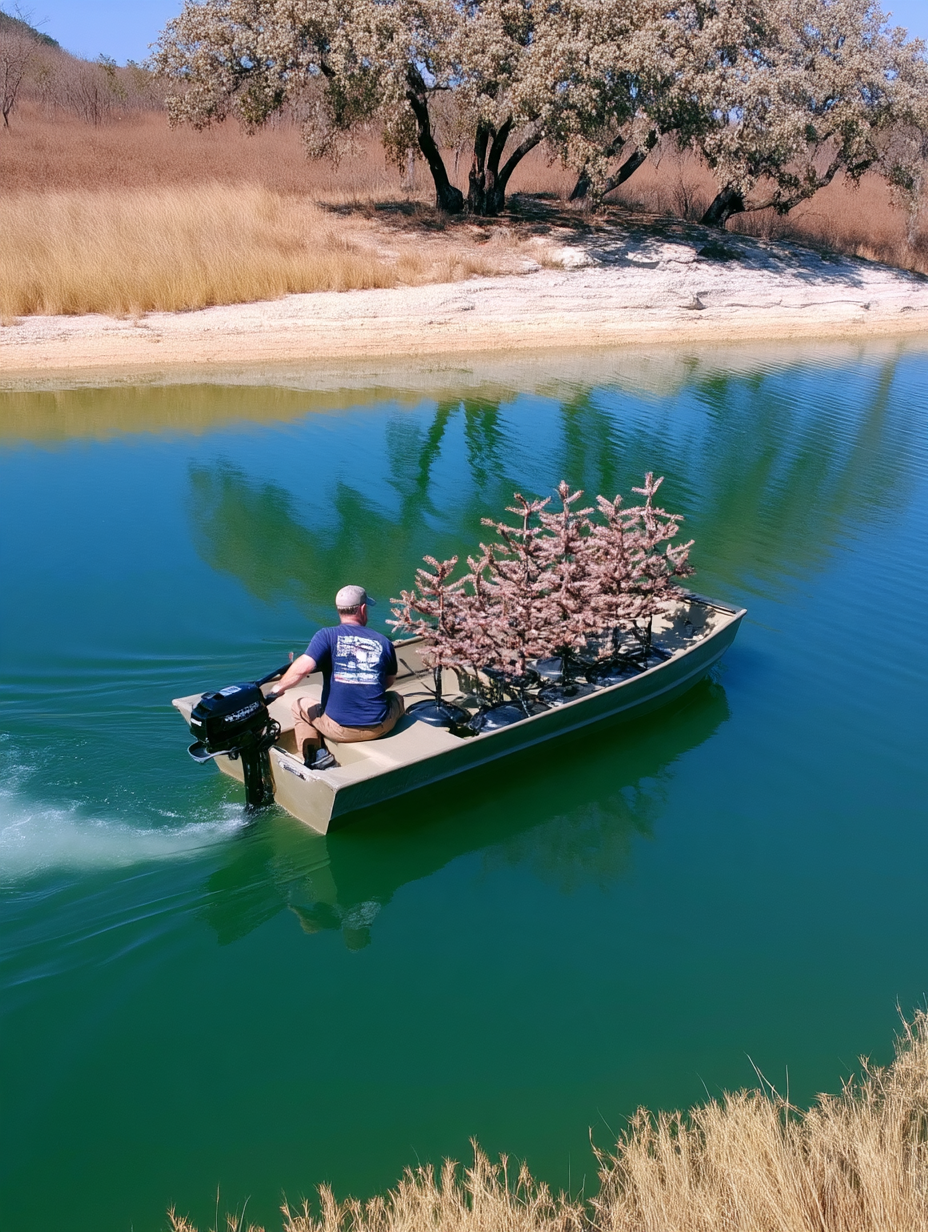
Artificial Habitat Can Add Structure Without Relying on Material That Rots
Natural timber can provide excellent fish habitat, but it changes over time. Smaller branches break down, wood softens, and the complexity of the structure gradually decreases.
Artificial fish habitat provides another option for existing ponds that need additional cover.
Branching synthetic structures create vertical and horizontal spaces that forage fish and predators can use while remaining in place for years without decomposing like natural wood.
Proper placement is still important. Dropping habitat randomly into the deepest part of the pond does not automatically make it useful.
Habitat works best when its depth, density, location, and surrounding structure match the species and management goals of the pond.
4. Habitat at More Than One Depth
Fish do not use the same depth all year.
Water temperature, dissolved oxygen, sunlight, spawning activity, prey location, and seasonal conditions all influence where fish spend time.
Habitat placed only in extremely shallow water may become less useful when the pond level drops. Structure installed only in very deep water may sit below the most productive zone during periods of stratification or low dissolved oxygen.
A better strategy is to create habitat at several depths where pond conditions allow it.
That gives fish more opportunities to move while remaining near useful cover.
5. Depth Changes, Drop-Offs, and Travel Routes
Not all fish habitat is something you physically add to a pond.
Changes in bottom contour can be just as important.
Points, ledges, submerged channels, humps, and transitions between shallow and deeper water create natural travel corridors.
Fish often use these routes when moving between feeding areas, spawning zones, and deeper refuge.
If a pond is being constructed or renovated, shaping some of this variation into the basin can create habitat before the pond ever fills.
In an existing pond, strategically placed rock or artificial structure can make an otherwise featureless transition more useful.
6. Open Water Is Habitat Too
It is easy to think of habitat only as something fish can hide inside.
Open water plays an important role as well.
Predators need room to pursue prey. Pelagic forage species use open-water zones. Anglers need fishable areas that are not packed with submerged structure.
A good habitat plan therefore creates contrast.
Dense cover may protect juvenile forage fish, while nearby open water gives predators opportunities to feed when those fish leave the structure.
The transition between structure and open water can become one of the most productive zones in the pond.
7. Shoreline Habitat and Controlled Aquatic Vegetation
Aquatic plants are sometimes treated as though any vegetation is automatically a problem.
In reality, moderate amounts of beneficial vegetation can provide valuable habitat.
Plants can create nursery cover, insect habitat, spawning areas, shade, and feeding opportunities.
Problems begin when nuisance vegetation becomes so dense that it interferes with pond use, reduces open-water access, or creates excessive organic loading when large areas die back.
The goal is balance.
A shoreline with some productive habitat is very different from a pond where vegetation has taken over most of the usable water.
Where Should Fish Habitat Be Placed?
There is no universal layout that works for every pond.
Habitat placement should consider pond depth, bottom contours, existing vegetation, water-level fluctuation, fishing access, and the species being managed.
Useful Placement Principles
- Place juvenile forage refuge near productive spawning areas.
- Create predator structure near transitions rather than isolating it in featureless open water.
- Use several depths instead of putting everything at one elevation.
- Leave enough open water for feeding and recreation.
- Keep structure away from swimming areas and heavily used access points.
- Consider how lower seasonal water levels may affect habitat depth.
- Mark or map installed structures so they can be monitored later.
A habitat plan becomes much more effective when it is based on the actual pond rather than a generic number of structures per acre.
Habitat and Fish Stocking Should Be Planned Together
Habitat does not replace good stocking decisions.
Likewise, stocking the right species does not automatically compensate for a pond with poor structure.
The two work together.
Forage fish need places to reproduce and survive. Predators need enough forage and suitable feeding habitat. Fish also need water quality and dissolved oxygen conditions capable of supporting the population.
If you are planning a new fishery or evaluating an existing one, our Texas Hill Country fish stocking guide explains why stocking decisions should begin with the pond rather than a generic fish list.
Can You Add Fish Habitat to an Existing Pond?
Absolutely.
Existing ponds often benefit from habitat improvements because natural timber may have decomposed, sediment may have buried older structure, vegetation may have changed, or the original pond simply was not designed with fisheries habitat in mind.
The first step is identifying what the pond already has.
Adding artificial habitat to a pond that already contains extensive dense vegetation may provide little additional benefit. In a clean, featureless pond with strong fish populations, however, strategically placed structure may substantially improve usable habitat.
Habitat should always support a specific management goal rather than being added simply because more structure sounds beneficial.
Build Habitat Around the Fishery You Want
A good fishing pond is a system.
Stocking, forage, water quality, oxygen, vegetation, harvest, and habitat all influence one another.
If the goal is trophy largemouth bass, habitat should support a strong forage base while providing productive predator structure.
If the goal is family fishing and healthy bluegill populations, spawning habitat and juvenile refuge may deserve greater emphasis.
The right answer depends on the pond.
Before adding more fish, consider whether the fish already living there have enough places to spawn, feed, hide, hunt, and move through the water column.
Sometimes improving the fishery does not start with another stocking truck. It starts with giving the existing population a better place to live.
Want to Build a Better Fishery?
Highland Pond Management helps Texas Hill Country pond owners evaluate fish populations, forage, water quality, vegetation, aeration, stocking, and habitat as one connected system.
Whether you are improving an established fishing pond or developing a new fishery, we can help determine where additional habitat will provide the most value.
Call (830) 914-2306 to discuss your pond and fishing goals.
Contact UsHow much fish habitat does a Texas pond need?
There is no single percentage or number of structures that is correct for every pond. Habitat requirements depend on pond size, depth, existing vegetation, fish species, water-level changes, and management goals. Strategic placement is generally more useful than simply adding as much structure as possible.
Is artificial fish habitat better than natural brush?
Each has advantages. Natural wood can provide excellent complex cover but gradually decomposes. Durable artificial habitat can provide long-lasting structure without rotting and can be positioned deliberately at selected depths. Many ponds benefit from a combination of habitat types.
Where should fish habitat be placed in a pond?
Useful locations often include spawning areas, depth transitions, points, drop-offs, and zones near deeper water. Placement should also account for seasonal water-level changes and recreational areas such as swimming zones, docks, and boat access.
Does fish habitat help largemouth bass grow bigger?
Habitat alone does not produce larger bass, but appropriate structure can improve feeding opportunities and support the forage population bass depend on. Bass growth also relies on predator numbers, forage abundance, water quality, genetics, harvest, and overall pond productivity.
Can a pond have too much fish habitat?
Yes. Excessively dense cover can protect too much forage from predators, reduce fishable water, and interfere with recreation or maintenance. A balanced pond includes both structured habitat and open water.
Can habitat be added to an older pond?
Yes. Older ponds can benefit from new structure when natural habitat has decomposed, sediment has buried existing cover, or the pond lacks useful depth and structural diversity. An assessment helps determine what type of habitat is actually missing.